Kazakhstan’s Grain Storage Shortfall: A Call for Infrastructure Expansion
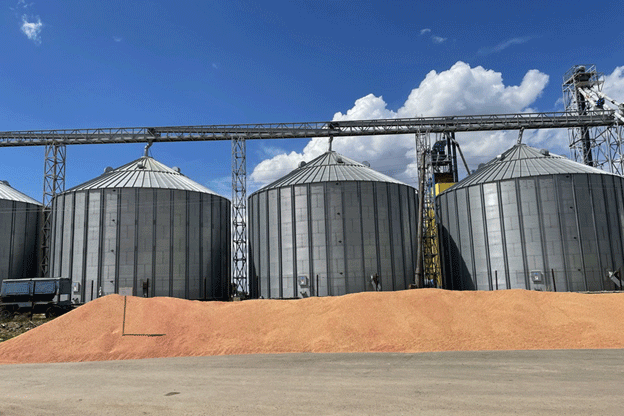
Kazakhstan faces a significant challenge in its agricultural sector: a severe shortage of grain storage capacity. This shortage compels farmers to sell and transport large quantities of grain immediately after harvest, leading to railway congestion and frequent loading bans. According to a 2023 report by the Agency for the Protection and Development of Competition, this issue necessitates urgent action to expand storage facilities and alleviate pressure on the transportation infrastructure.
Grain Production vs. Storage Capacity
In 2022, Kazakhstan’s grain production reached approximately 22.1 million tons, yet the total storage capacity stood at only 10.4 million tons. This discrepancy means that more than half of the harvested grain cannot be stored properly, leading to a rush to sell and transport the excess. The Grain Union of Kazakhstan highlights that the limited storage capacity and underdeveloped elevator infrastructure have significantly strained the country’s railway network, exacerbating logistical challenges.
Railway Infrastructure Under Strain
The high volume of grain requiring transport exceeds the capacity of Kazakhstan’s railway system. The report notes that the amount of grain declared for transportation far surpasses the railway network’s throughput capabilities. This bottleneck not only causes delays but also necessitates the implementation of loading bans to manage the congestion.
Recommendations for Expanding Storage Capacities
To address these challenges, the Agency for the Protection and Development of Competition has recommended that the Ministry of Agriculture consider expanding the country’s elevator and storage facilities. Such an expansion would ensure a more even and continuous flow of grain transport throughout the year, rather than the current surge immediately post-harvest. This strategy aims to reduce the strain on the railway system and improve overall efficiency in grain logistics.
Additional Transportation Challenges
Further complicating the situation is the shortage of both maneuverable and mainline locomotives, coupled with reduced railway capacity. The Ministry of Transport is currently discussing legislative amendments to improve infrastructure management. These amendments include the potential separation of the National Infrastructure Operator from Kazakhstan Temir Zholy (KTZ), the national railway company, with subsequent regulation by an authorized body. Additionally, a legislative framework is being considered to establish the role of a National Transport and Logistics Company.
Investments in Locomotive Fleet
To modernize and expand the locomotive fleet, KTZ has procured 113 locomotives in 2023. Plans are in place to acquire a total of 559 locomotives by 2028, including 193 electric and 366 diesel locomotives. These acquisitions are expected to enhance the capacity and reliability of the railway network, thereby supporting the efficient transport of agricultural products.
Kazakhstan’s grain storage and transportation challenges highlight the need for substantial infrastructure investment and strategic planning. By expanding storage capacities and modernizing the railway fleet, Kazakhstan can alleviate current bottlenecks and ensure a smoother, more efficient grain supply chain. These measures are crucial for supporting the country’s agricultural sector and maintaining its competitiveness in the global grain market.
Error