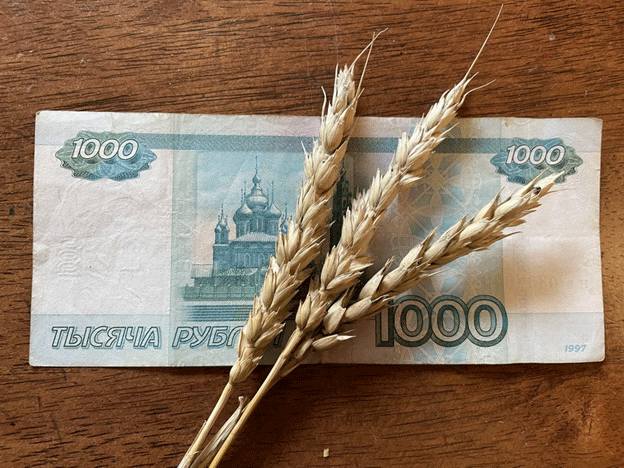
Kazakhstan is confronting significant disruptions in its wheat supply chain due to recent currency devaluations and escalating trade tensions with Russia. The rapid depreciation of the Kazakhstani tenge against the Russian ruble, coupled with import restrictions, has led to increased food prices and concerns over domestic wheat availability.
Currency Depreciation and Its Impact
In February 2025, the tenge experienced a sharp decline of 20% against the ruble, dropping from 4.7 to 5.7 tenge per ruble. This depreciation has made Russian wheat imports more expensive for Kazakhstani buyers. For instance, Russian wheat prices in border regions are now approximately 15,000 rubles (85,000 tenge) per ton for third-class wheat, surpassing local prices, which range between 73,000 and 76,000 tenge per ton. Consequently, importing Russian wheat has become economically unfeasible, compelling local millers and poultry farmers to rely solely on domestic production.
Trade Disputes and Import Restrictions
The situation is further complicated by ongoing trade disputes between Kazakhstan and Russia. In August 2024, Kazakhstan imposed a ban on wheat imports to protect its domestic market. In retaliation, Russia restricted imports of various Kazakhstani agricultural products, including wheat, citing phytosanitary concerns. Although Kazakhstan lifted its wheat import ban on January 1, 2025, the lingering trade tensions have disrupted the traditional supply routes and exacerbated the wheat shortage.
Domestic Wheat Production and Price Fluctuations
Despite an estimated wheat production of 15.8 million tons in the 2024/2025 marketing year, Kazakhstan has faced challenges in meeting domestic demand. As of January 1, 2025, wheat reserves stood at 15.7 million tons, a 34.6% increase from the previous year. However, exports decreased by 18% in 2024 compared to 2023, indicating a tightening supply. Additionally, domestic wheat prices have been volatile; as of February 10, 2025, third-class wheat with 28% gluten content decreased to 110,000 tenge per ton, while other classes experienced price increases. This volatility poses challenges for poultry farmers, as feed costs constitute approximately 70% of poultry production expenses. The surge in feed prices has led to projections of a 10% increase in poultry meat prices by spring 2025.
Inflationary Pressures and Economic Outlook
The combination of currency depreciation, trade restrictions, and rising production costs has contributed to mounting inflationary pressures in Kazakhstan. Food imports from Russia accounted for nearly half ($1.9 billion out of $4 billion) of Kazakhstan’s total food imports in 2024. The increased cost of these imports, alongside the anticipated effects of lifting price caps on fuel and a planned value-added tax (VAT) hike from 12% to 16%, is expected to further accelerate inflation. Notably, even before these developments, food expenses constituted over half of the average Kazakhstani household’s expenditures, a stark contrast to the 10-15% observed in developed countries.
Kazakhstan’s agricultural sector is navigating a complex landscape marked by economic and geopolitical challenges. The reliance on domestic wheat production has intensified due to unfavorable currency exchange rates and strained trade relations with Russia. To mitigate these issues, Kazakhstan may need to explore alternative import partners, invest in boosting domestic agricultural productivity, and implement policies aimed at stabilizing the economy and controlling inflation.
Error