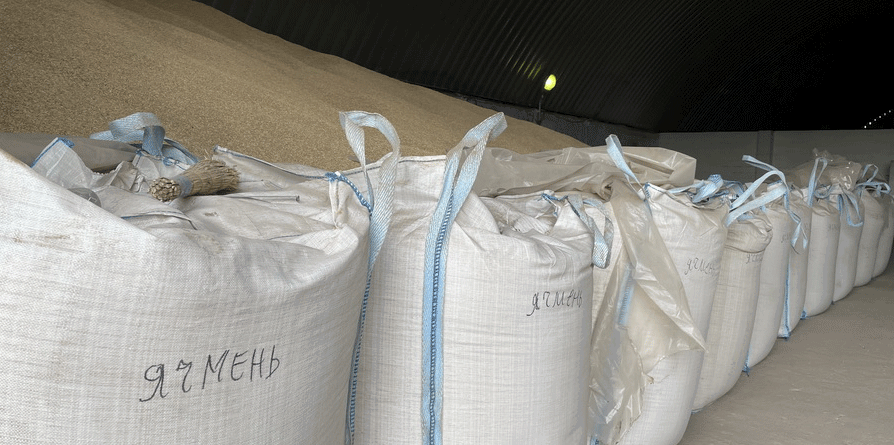
Kazakhstan’s barley market is experiencing a significant price surge, driven by robust demand from key importers—China and Iran—and reduced supply from Russia. According to Yevgeny Karabanov, Head of the Analytics Department at Kazakhstan’s Grain Union, domestic barley prices currently range between 87,000–91,000 KZT per ton ($190–200), while export prices stand at $235–238 per ton (FOB Aktau) for Iran and $215–218 per ton (DAP Dostyk/Altynkol) for China.
Record Export Volumes Amid Shrinking Stocks
From September 2024 to April 2025, Kazakhstan exported 1.72 million tons of barley, a staggering 854,000-ton increase compared to the same period last season. The primary destinations were:
- Iran – 1.064 million tons
- China – 414,000 tons
- Uzbekistan – 125,000 tons
However, barley stocks in Kazakhstan are now dwindling, leading to a decline in export volumes. April 2025 shipments dropped to 173,500 tons, down from 214,800 tons in March. Karabanov attributes this to seasonal factors and depleting export potential for the current marketing year.
Russia’s Declining Barley Imports Impact Supply
Kazakhstan’s barley imports from Russia have plummeted to 60,000 tons over seven months—a sharp decline from 234,000 tons during the same period last season. This shortage has further tightened domestic supply, keeping prices at their highest levels since January 2023.
Revised Export Forecasts Reflect Market Optimism
Given the sustained demand, the Grain Union has revised its 2024/25 barley export forecast to 1.96 million tons, up by 110,000 tons from earlier estimates. For context, the current price of third-class wheat in Kazakhstan is 95,000 KZT per ton, making barley a competitive alternative for both domestic and international buyers.
Kazakhstan’s barley market is thriving due to strong international demand, particularly from China and Iran, while reduced Russian imports have tightened supply. With prices at multi-year highs and export projections rising, farmers and traders stand to benefit—but dwindling stocks may soon challenge further growth. Stakeholders should monitor market trends closely to capitalize on current opportunities.
Error