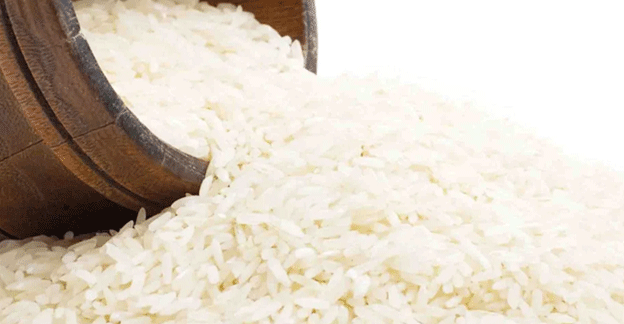
Jeonbuk, once heralded as a cornerstone of South Korea’s agricultural prowess, has experienced a sharp decline in rice production. According to data released by the Korea Statistics Office on November 15, Jeonbuk’s rice output for 2024 is projected at 545,000 tons, a 6.4% decrease from last year’s 582,000 tons. This reduction far exceeds the national average decline of 3.2%, marking the province as the hardest hit among the country’s 17 regions.
In terms of production rankings, Jeonbuk has slipped to third place, trailing behind Jeonnam (709,000 tons) and Chungnam (706,000 tons). The gap between Jeonbuk and top-producing Jeonnam now stands at a significant 164,000 tons, underscoring the pressing challenges facing the region.
Contributing Factors to the Decline
- Reduced Cultivation Area:
Jeonbuk’s rice cultivation area has decreased by 2.8%, from 107,383 hectares in 2023 to 104,348 hectares in 2024. This reflects a broader trend of shrinking agricultural land as farmers shift to other crops or urban development encroaches on rural areas. - Lower Yield Per Unit Area:
Average yield per 10a (1,000 square meters) dropped from 542 kg last year to 522 kg this year, a 3.7% reduction. This decline is attributed to unfavorable weather conditions and pest infestations. - Adverse Weather Conditions:
The critical grain-filling period (September 1 to October 15) saw an increase in average temperature to 22.2°C from 20.6°C last year. Concurrently, rainfall surged by 32.9%, with cumulative precipitation at 263.2 mm compared to 198.0 mm the previous year. These factors disrupted crop growth and increased susceptibility to pests. - Rising Pest Damage:
The pest infestation rate soared to 11.9%, compared to 9.8% last year, compounding production challenges. Farmers have struggled to implement effective pest management strategies amidst escalating climatic variability.
The Way Forward
Experts and local leaders stress the urgent need for comprehensive measures to restore Jeonbuk’s agricultural competitiveness.
- Climate Resilience: Investments in heat- and drought-resistant rice varieties are critical to counteract rising temperatures and erratic rainfall.
- Strengthened Pest Management: Enhanced pest control programs, combined with farmer education, could mitigate losses.
- Infrastructure Modernization: Improvements in irrigation systems and field drainage are essential to support sustainable rice farming.
Beyond these, fostering collaborations between government, research institutions, and farmers will be vital to achieving long-term stability.
The sharp decline in Jeonbuk’s rice production is a wake-up call, highlighting the vulnerabilities of even historically robust agricultural regions. With climate change and structural inefficiencies exacerbating challenges, targeted reforms are imperative. By embracing innovative farming practices, infrastructure upgrades, and better pest management, Jeonbuk can reclaim its position as a leader in South Korea’s rice industry.
Error