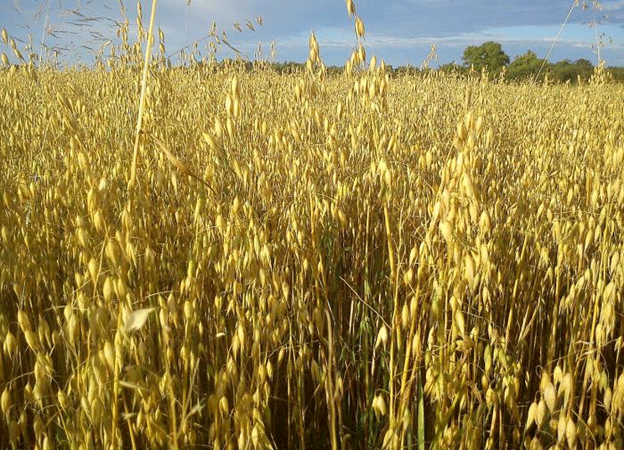
In a groundbreaking achievement for agriculture in Siberia, researchers at the “Yenisei Siberia” Scientific and Educational Center (NOЦ) have unveiled new varieties of wheat, barley, and oats designed to maximize productivity in the region’s challenging climate. These new grains not only meet existing agricultural standards but also surpass traditional counterparts by 10-15% in yield, making them a significant advancement for local farmers.
The development process for these grains involves meticulous plant breeding, focusing on creating varieties with improved characteristics such as germination rates, yield potential, and structural integrity of commercially valuable parts. Central to this endeavor is the analysis of plant genomes to identify genes responsible for desirable traits. The breeding of these “super genes” is conducted naturally, avoiding any direct genetic modification. The entire process, from identifying key genes to registering the new variety in the State Register, typically takes 10 to 12 years.
A major focus of this research is the adaptation of new grain varieties to the climatic conditions of the Krasnoyarsk Krai and the Republic of Khakassia. Sergey Gerasimov, head of the laboratory for the breeding of gray bread at the Krasnoyarsk Research Institute of Agriculture, emphasized the importance of frost resistance for winter crops. Unlike spring-sown crops, winter varieties are planted in the fall and must endure harsh winter conditions, making frost resilience crucial for successful cultivation in Siberia.
The newly developed barley varieties feature smooth awns, which enhance their suitability as livestock feed by preventing injury to the animals’ mouths. Moreover, tests indicate that the new winter rye varieties produce high-quality flour suitable for bread-making, further diversifying the region’s agricultural output.
Currently, these new varieties are undergoing state trials and will soon enter the patenting process for registration in the State Register of Breeding Achievements. Following this, they will become accessible to major agribusinesses. To ensure a sufficient seed supply for the market, researchers are actively working on seed multiplication.
In keeping with a tradition established with the barley variety “Abalak,” which has achieved prominence in the Tyumen region, the new varieties have been named after Siberian toponyms, highlighting their connection to the local heritage and environment.
The “Yenisei Siberia” Scientific and Educational Center, operating under the Siberian Federal University, unites nine universities, five research institutes, and 14 industrial enterprises. Its efforts are aligned with improving the ecological situation in the region and advancing the decarbonization of Russian industry as part of the national project “Science and Universities.”
The development of climate-resilient super grains by the “Yenisei Siberia” Scientific and Educational Center represents a significant stride toward enhancing agricultural productivity in Siberia. By leveraging advanced breeding techniques and focusing on the specific challenges posed by the local climate, these innovations promise to support farmers in achieving higher yields and adapting to changing environmental conditions.
Error