
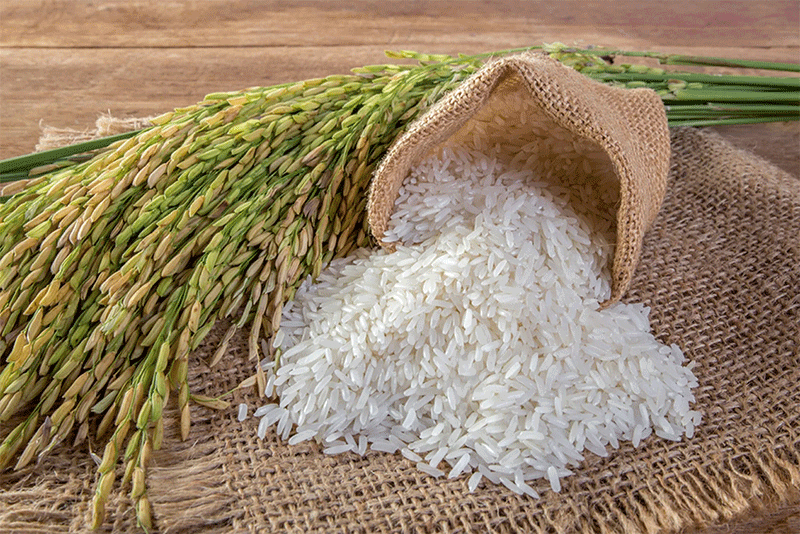
Malaysia has formally requested to import 2,000 tons of rice per month from Indonesia through a business-to-business (B2B) scheme. While Indonesia has confirmed its readiness, the deal awaits Malaysia’s final response. Deputy Agriculture Minister Sudaryono emphasized that the volume is negligible compared to Indonesia’s domestic stock, as Bulog distributes 12,000–20,000 tons of rice daily.
The Bigger Picture: ASEAN Food Security
This potential trade aligns with broader ASEAN efforts to stabilize regional food supply chains. In 2023, global rice prices surged by 19.7% (FAO, 2023) due to climate disruptions and export restrictions. Malaysia, which imports 30% of its rice (USDA, 2023), seeks diversification amid geopolitical and climate risks. Indonesia, meanwhile, boasts a buffer stock of 1.2 million tons (Bulog, 2024), ensuring export plans won’t jeopardize local availability.
Technology and Collaboration Opportunities
The talks included agricultural technology partnerships, such as joint R&D and training—a move welcomed by Indonesia’s Agriculture Minister Amran Sulaiman. Precision farming, hybrid seeds, and water-efficient irrigation could benefit both nations, especially as climate change reduces Southeast Asia’s rice yields by up to 15% by 2030 (IRRI, 2023).
Farmer and Agribusiness Implications
For farmers, this deal signals:
- Market expansion: New export channels could incentivize production efficiency.
- Tech adoption: Cross-border knowledge transfer may boost yields.
- Price stability: Managed exports help balance domestic and international demand.
The Indonesia-Malaysia rice trade underscores ASEAN’s push for collective food resilience. While the 2,000-ton monthly export is modest, its strategic value lies in strengthening regional ties and setting a precedent for agri-tech collaboration. For stakeholders—from smallholders to agronomists—this is a step toward sustainable, integrated agriculture.
Error