Overview of Rabi Crop Acreage
The 2024-25 rabi season has brought promising growth to India’s agriculture sector, with the total sown area reaching 493.62 lakh hectares (lh), a 1.5% year-on-year increase. This progress, as reported by the Ministry of Agriculture, reflects strong performances in wheat and pulses, though oilseed acreage has seen a notable decline.
Wheat Takes the Lead
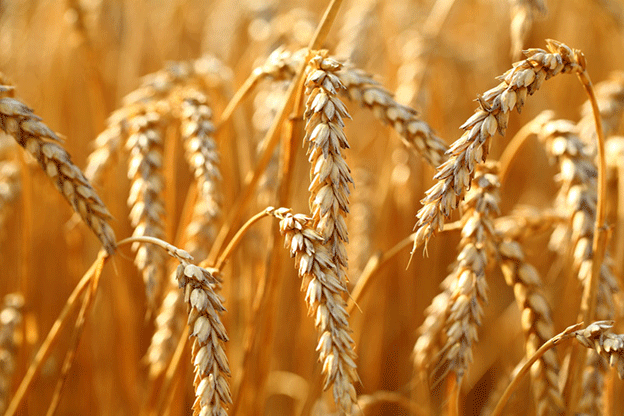
Wheat remains the primary contributor to rabi growth, with an acreage increase of 2.3% year-on-year to 239.49 lh. The crop has benefited from favorable weather and government incentives such as a ₹125/quintal bonus on the Minimum Support Price (MSP) in Rajasthan. Farmers in Rajasthan, which has emerged as a key wheat-producing state, have expanded wheat sowing to 26.18 lh, aiming for a target of 32 lh. Across the country, wheat is now planted on 78% of the normal rabi sowing area for this crop, positioning it for robust production.
Pulses Gain Ground
Pulses have seen a surge in sowing, with acreage rising by 4.3% to 120.65 lh. The growth is primarily driven by chana (gram), which has expanded to 86.09 lh, marking a 7.1% year-on-year increase. Masur (lentil) acreage has also risen by 1.7% to 14.75 lh. The shift towards pulses is attributed to favorable market prices and resilient demand, which have encouraged farmers to prioritize these crops.
Challenges in Oilseed Sowing
Oilseeds, however, have lagged behind, with sowing declining by 4.4% to 86.52 lh. Mustard, the primary oilseed crop, saw a 4.3% drop in acreage to 81.07 lh, with Rajasthan—accounting for 40% of the country’s mustard production—reporting a decline in sowing area. Reduced profitability and competition from wheat and pulses are driving this shift, as farmers seek crops with higher economic returns.
Regional Trends
- Rajasthan: A key contributor to rabi acreage, Rajasthan has seen a notable shift towards wheat and chana, driven by government incentives and price benefits.
- Other States: Uttar Pradesh, Punjab, and Haryana have reported consistent wheat sowing, benefiting from favorable weather conditions, including recent rains and snowfall, which have replenished soil moisture.
Weather and Production Outlook
Current rainfall and snowfall in northern and northwestern regions have supported rabi crop development, ensuring sufficient soil moisture levels. However, experts caution that February-March weather conditions will be critical, particularly for wheat and pulses. Excessive rain or untimely heatwaves during the grain-filling stage could impact yields.
The government remains optimistic about achieving the target of 164.55 million tonnes of rabi foodgrain production, contributing to the annual goal of 341.55 million tonnes. Wheat and pulses are expected to play a pivotal role in this effort, offsetting declines in oilseed output.
India’s rabi crop season is on a positive trajectory, marked by increased wheat and pulse acreage. The shift in sowing patterns reflects farmers’ responsiveness to market trends, government incentives, and climatic conditions. However, challenges remain for mustard and other oilseeds, which require attention to balance overall production. The season’s success will ultimately depend on stable weather during the critical growth stages in February and March.
Error