

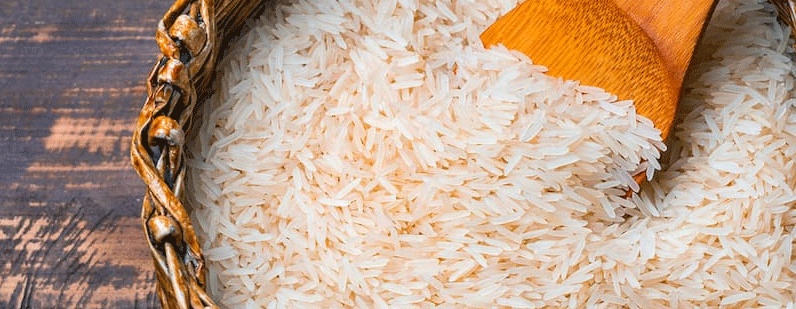
India’s agricultural sector is demonstrating formidable strength, as confirmed by official data revealing record-breaking government-held grain stockpiles. As of September 1, 2025, rice reserves soared to a historic 48.2 million metric tons—a 14% increase from the previous year and more than triple the government’s target of 13.5 million tons. Simultaneously, wheat stocks reached a four-year high of 33.3 million tons, comfortably exceeding the official target of 27.6 million tons. This remarkable abundance, fueled by a record harvest, positions India not only as a domineering force in global grain trade but also as a nation with unparalleled domestic food security leverage.
The rice surplus solidifies India’s role as the world’s essential rice supplier, accounting for approximately 40% of global rice exports. With the removal of the last export restrictions in March 2025, the All-India Rice Exporters’ Association projects a record-shattering export volume of 22.5 million tons in 2025, a 25% surge from the previous year. This aggressive export posture, maintained despite massive domestic reserves, highlights the success of agricultural policies in boosting productivity. This trend is part of a larger global pattern where major producers are ramping up output; however, according to the USDA’s July 2025 World Agricultural Supply and Demand Estimates report, India’s export growth continues to outpace that of other major competitors, further tightening its grip on the market.
On the domestic front, the rebuilt wheat reserves provide a critical tool for price stabilization. After three years of concerningly low levels that limited government intervention, the current stockpile of 33.3 million tons allows authorities to strategically release wheat onto the open market. This capacity is crucial for mitigating price spikes during the upcoming festive season in October, where demand for wheat-based products surges due to celebrations like Dussehra and Diwali. By ensuring adequate supply, the government can effectively shield consumers from food price inflation, a key pillar of social stability.
However, this bounty is not without its challenges. The new rice harvest is expected to begin arriving in warehouses next month, placing immense strain on India’s storage infrastructure. The existing capacity, often cited as a bottleneck by the Food Corporation of India (FCI), risks being overwhelmed, potentially leading to post-harvest losses. This very challenge, however, is catalyzing change. As noted by a Mumbai-based trader, the government is actively reviewing measures to address these logistical hurdles. The current surplus is a powerful economic driver, likely to provoke much-needed investment in modernizing and expanding the country’s grain storage and management capabilities, a move that will benefit the entire agricultural value chain.
From Shortage to Strategic Surplus
India’s record grain stocks represent a significant strategic achievement. The situation illustrates a successful transition from vulnerability to strength, enabling the dual strategy of aggressive global export and robust domestic price control. For farmers and agronomists worldwide, India’s example underscores the importance of integrated policies that support yield increases, strategic food reserves, and market access. The key challenge ahead is logistical—transforming this abundance into a sustainable advantage through investments in modern storage infrastructure. This will ensure that the fruits of a record harvest are not lost but instead fully leveraged for national and global food security.
Error