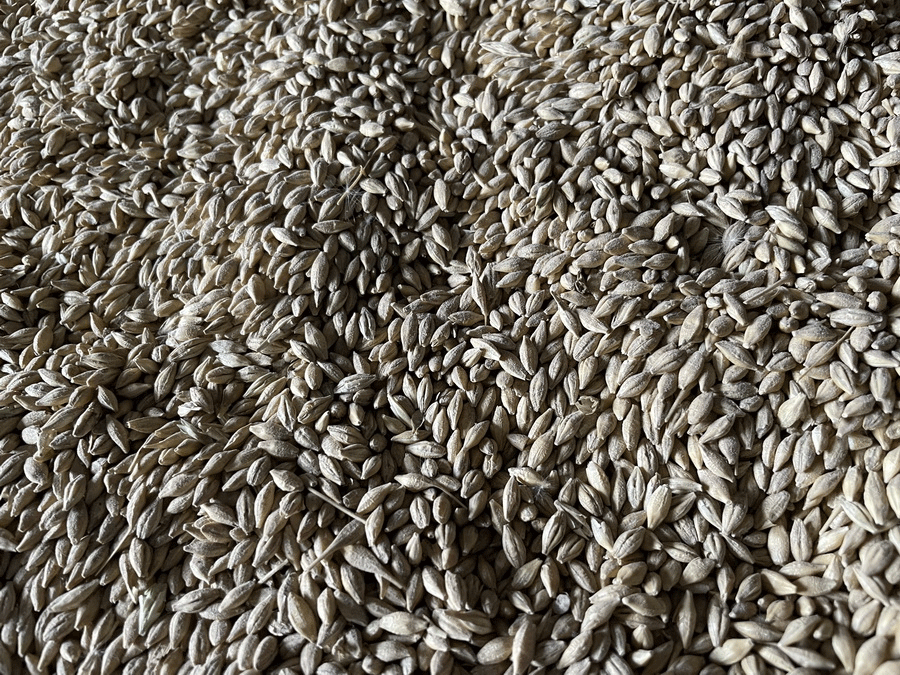
Kazakhstan, a major grain exporter in Central Asia, is facing a severe logistical crisis that is stranding hundreds of thousands of tons of agricultural commodities and disrupting trade flows to crucial markets. The national railway company, KTZh, has implemented a series of embargoes, including a ban on loading grain destined for the Caspian Sea port of Aktau from October 6-20 due to a complete lack of terminal capacity and a backlog of 700 loaded wagons. This port is the primary gateway for Kazakh barley exports to Iran, a trade relationship that accounted for 1.228 million tonnes (65% of total barley exports) in the 2024/25 marketing year. Simultaneously, a separate ban is in effect for grain shipments to China via the Dostyk crossing, where 470 covered wagons are stalled with another 3,600 approaching, due to slow unloading by Chinese railways.
These acute blockages are symptoms of a much larger, systemic infrastructure deficit. The root cause, as stated by KTZh, is insufficient capacity across the entire national rail network. A staggering 94,000 freight wagons, including 45,000 foreign-owned ones, are currently immobilized within Kazakhstan. This has prompted an unprecedented three-month ban (October 1 – December 31, 2025) on loading cargo into foreign-owned wagons destined for key Chinese transit points and Caspian ports. The impact on regional trade is significant. The Grain Union of Kazakhstan has already forecast a decline in barley exports to Iran to 980,000 tonnes for the current marketing year, and these disruptions threaten to push that figure even lower. This situation creates a “perfect storm” for buyers in Iran and China, who rely on Kazakh supplies, and depresses local prices for Kazakh farmers who cannot move their product.
The recurring and severe logistical gridlock in Kazakhstan underscores a critical vulnerability in a key Eurasian agricultural corridor. For farmers and traders, these events highlight the extreme price and execution risks associated with supply chains dependent on single, overburdened routes. The situation is a stark reminder that production is only half the battle; efficient logistics are the lifeblood of agricultural exports. For Kazakhstan to secure its position as a reliable supplier and for its farmers to receive fair value, massive public and private investment in rail infrastructure, port capacity, and supply chain digitization is urgently required. In the short term, market participants must factor in heightened volatility and seek diversification in both origin points and transport routes to mitigate these systemic risks.
Error