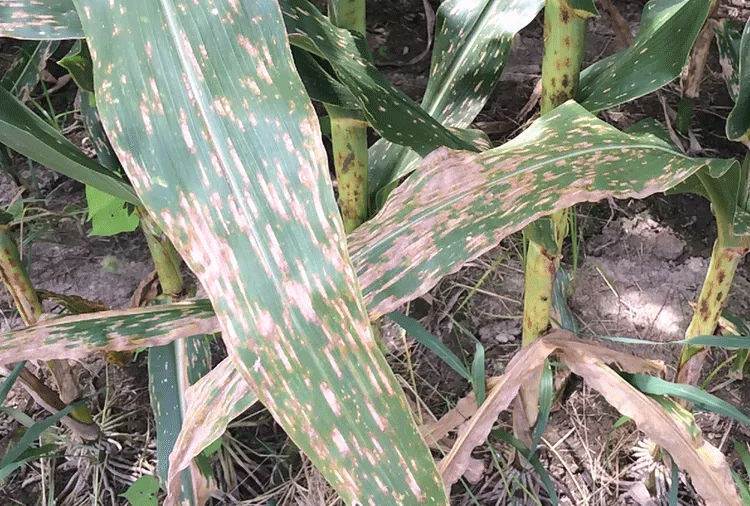
Gray leaf spot (Cercospora zeae-maydis) remains one of the most economically damaging diseases in corn, with Purdue University confirming potential yield losses of up to 50% in severe cases. Recent studies from the University of Illinois (2023) indicate that climate change is exacerbating GLS spread, as warmer, wetter conditions favor fungal proliferation.
Symptoms and Disease Development
Early symptoms are easy to miss—small, yellow-ringed lesions appear on lower leaves, progressing into rectangular, gray-brown spots up to 2 inches long. The disease spreads via wind and rain, with spores surviving in crop residue. According to Iowa State University (2024), delayed scouting leads to unchecked infections, reducing photosynthetic capacity and kernel development.
Favorable Conditions for Outbreaks
GLS thrives in prolonged humidity (over 90%) and temperatures between 75–85°F. Extended leaf wetness from heavy dew or frequent rains accelerates infection. Research from Kansas State University (2023) shows that no-till fields with continuous corn are at highest risk due to residue-borne spores.
Effective Management Strategies
- Hybrid Selection – Plant resistant or tolerant hybrids. The 2024 Corn Disease Handbook reports a 30–60% reduction in severity with resistant varieties.
- Residue Management – Rotate crops (soybeans/wheat) and till fields to break the disease cycle.
- Timely Fungicide Application – Spray between VT (tasseling) and R1 (silking) when disease pressure is confirmed. Syngenta trials (2024) show strobilurin-triazole mixes provide the best control.
Gray leaf spot poses a serious economic risk, but proactive management—through resistant hybrids, residue reduction, and well-timed fungicides—can mitigate losses. Regular scouting and adapting to changing climate conditions will be key to long-term control.
Error