• About
  • Advertise
  • Careers
  • Contact
Saturday, December 13, 2025
  • Login
No Result
View All Result
Field Crops news
  • Home
  • News
  • AgroTech & Innovation
  • Science
  • Sustainability
  • Market News
  • Research & Development
  • Home
  • News
  • AgroTech & Innovation
  • Science
  • Sustainability
  • Market News
  • Research & Development
No Result
View All Result
Field Crops news
No Result
View All Result
Home News

From Farm to Fabric: Transforming Wheat and Oat Waste into Sustainable Textiles

by Tatiana Ivanova
6 August 2025
in News
0
From Farm to Fabric: Transforming Wheat and Oat Waste into Sustainable Textiles
0
SHARES
5
VIEWS
Share on FacebookShare on Twitter

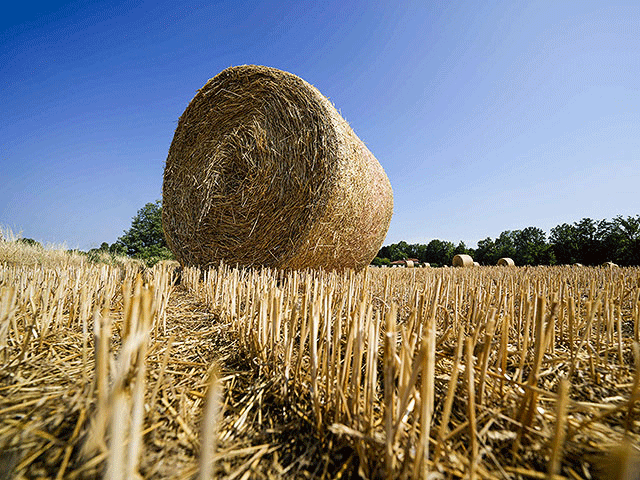
Every year, millions of tons of agricultural residues—such as wheat straw, oat hulls, potato pulp, and beet pulp—are left after harvest. Instead of burning or discarding these byproducts, scientists are now exploring ways to repurpose them into valuable materials, including textiles.

A study by Chalmers University of Technology tested various agricultural residues and found that oat hulls and wheat straw are the most effective for producing soluble pulp, a key material in textile manufacturing. Unlike traditional wood-based cellulose, which requires extensive processing (debarking, chipping, and heavy chemical use), agricultural waste can be processed more efficiently.

Eco-Friendly Processing: The Soda Cooking Method

The researchers used soda cooking, an alkaline boiling process that breaks down the raw material without toxic chemicals. This method is:

  • More sustainable – No harmful environmental impact.
  • Less chemically intensive – Requires fewer chemicals than wood pulp processing.
  • Simpler and cost-effective – Eliminates steps like debarking and grinding.

Additionally, this approach adds value to agricultural waste, turning low-value byproducts into high-demand textile materials.

Beyond Wheat and Oats: Expanding the Possibilities

The research team is now investigating other agricultural residues, including grass pulp, with promising results. In an ongoing international project, they have successfully produced textile fibers from wheat and grass-based cellulose, paving the way for broader applications.

The conversion of agricultural waste into textiles presents a win-win solution:
✔ Reduces farm waste and environmental pollution.
✔ Offers a sustainable alternative to wood-based and synthetic fabrics.
✔ Creates new revenue streams for farmers and agribusinesses.

As this technology advances, we may soon see clothing made from crop residues on a commercial scale, marking a significant step toward a circular economy in agriculture.

Error

Tags: Agricultural Wastecellulose fibercircular agriculturecrop residue upcyclingeco-friendly fabricfarm-to-fabricoat hullssoda cookingsustainable textileswheat straw

Tatiana Ivanova

Next Post
Canada’s Organic Overhaul: New Rules on Struvite Fertilizers, Fencing & Farm Transitions Spark Debate

Canada's Organic Overhaul: New Rules on Struvite Fertilizers, Fencing & Farm Transitions Spark Debate

Newsletter

Field Day in Ussuriysk: High-Yield Corn Hybrids and Soybean Varieties Take Center Stage

Field Day in Ussuriysk: High-Yield Corn Hybrids and Soybean Varieties Take Center Stage

7 June 2025

Global Market Fluctuations Impacting Agricultural Commodities

9 August 2024

U.S. Wheat Prices Hit Four-Year Low: Analyzing the Global and Domestic Forces at Play

4 August 2024

How Russia’s 2024 Wheat Harvest Decline Could Impact the Global Grain Market

20 September 2024

Farmers Brace for Higher Grain Prices Amid Rising Production Costs and Variable Yields

13 September 2024

Corn Borer on the Rise: Vigilance and Early Intervention Required in Key Regions

6 September 2024

From 30 to 300 Acres: How Xunke County’s Waxy Corn Became a Model for Niche Crop Success

24 August 2025

Beyond the Grain Train: How New Rail Corridors are Reshaping Agricultural Trade and Regional Stability

10 November 2025

Securing the Future: Israel Signs Emergency Wheat Supply Agreement with Romania

16 August 2024

The Future of Austrian Agriculture: Empowering Young Farmers

13 June 2024
  • About
  • Advertise
  • Careers
  • Contact
Call us: +51 93 999 5140

© 2020-2024 Field Crops news

Welcome Back!

Login to your account below

Forgotten Password?

Retrieve your password

Please enter your username or email address to reset your password.

Log In
No Result
View All Result
  • Home
  • News
  • Science
  • Sustainability
  • AgroTech & Innovation
  • Market News
  • Science
  • Research & Development
  • About
  • Contact

© 2020-2024 Field Crops news