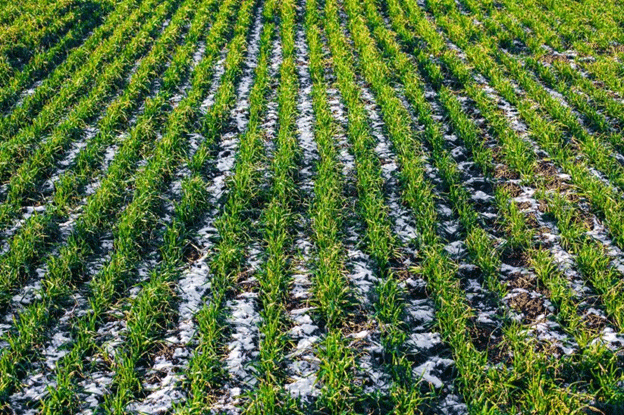
A Season of Extremes
The 2024 U.S. winter wheat crop faced significant hurdles from the outset, with drought affecting over 60% of wheat-growing regions by the end of October. Early crop condition ratings were the second lowest since 1986, raising concerns about production quality and supply. However, November’s dramatic shift in weather brought unprecedented rains to the central and southern Plains, offering much-needed moisture recharge.
According to the U.S. Department of Agriculture (USDA), winter wheat in good-to-excellent condition improved significantly, rising from 38% in late October to 55% by late November. This marked a critical turning point as the crop entered winter dormancy with better subsoil moisture levels than in recent years.
Regional Improvements
Precipitation patterns varied widely across regions:
- Kansas: Conditions improved to 55% good-to-excellent, thanks to consistent rainfall throughout November.
- Oklahoma and Texas: Benefited from substantial rain, bringing their ratings to 48% and 52% good-to-excellent, respectively.
- Colorado: Led the nation with 68% of its winter wheat rated good-to-excellent.
- Northern Plains (Montana and South Dakota): Continued to struggle, with Montana reporting no wheat in excellent condition and South Dakota seeing a decline to 24% good-to-excellent.
Farmers in the southern Plains expressed optimism, noting that the late rains helped establish better root systems and growth for wheat that had not yet emerged. However, in areas like Montana and South Dakota, pockets of dryness persisted, tempering the overall outlook.
Challenges Ahead
Despite the promising moisture recharge, experts stress that favorable spring conditions are crucial. Justin Gilpin, CEO of Kansas Wheat, emphasized the importance of timely rains during the grain-filling stage in May and June. “Fall rains are a great start, but they don’t eliminate the need for consistent spring moisture,” he noted.
Moreover, winter weather extremes such as low temperatures and the availability of snow cover will play a pivotal role in determining how well crops survive the dormancy period. Farmers remain watchful of potential cold snaps that could damage wheat plants without sufficient insulation from snow.
Economic and Acreage Considerations
As the market awaits the USDA’s January acreage report, analysts anticipate a slight decline in Kansas wheat planting, potentially down 3% compared to last year. Persistent drought during the planting season and lower commodity prices may have influenced planting decisions. However, the improved moisture situation has raised hopes for better yields, provided spring rains cooperate.
The U.S. winter wheat crop has overcome its first major hurdle, with November’s rains alleviating immediate drought concerns and setting the stage for improved production prospects. While the current moisture levels offer optimism, the success of the 2025 harvest will ultimately hinge on favorable spring weather and consistent rainfall. For now, farmers can take some comfort in knowing their crop is better positioned to face the challenges ahead.
Error