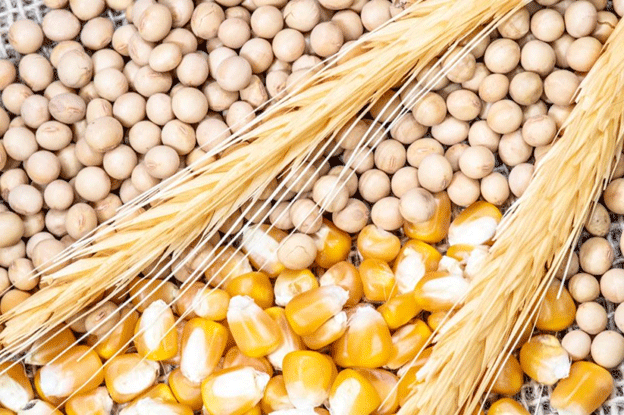
Global grain production is facing headwinds as the Food and Agriculture Organization (FAO) of the United Nations revises its 2024-25 forecasts. The latest data, released on December 6, anticipates a 0.6% decline in overall grain production to 2.841 billion tonnes, marking the second-largest output ever. This adjustment reflects challenges in major producing regions and varying trends across wheat, corn, and rice sectors.
Corn Production and Challenges
Global corn output is projected at 1.217 billion tonnes, a 2% year-on-year decline. Lower-than-expected yields in the European Union and the United States are key drivers of this reduction. Prolonged dry spells in parts of the EU and drought conditions in major U.S. corn belts have suppressed productivity, challenging farmers to adapt to increasingly erratic weather patterns.
Wheat: Mixed Fortunes in Key Regions
The FAO revised its wheat production estimate to 789 million tonnes, matching the 2023-24 output. While production remains steady globally, regional challenges are evident.
- European Union: Excessive rainfall has dampened yields, particularly in central and northern regions, where saturated soils hindered harvests.
- Russia: Below-average rainfall has led to dry soil conditions, potentially limiting winter wheat plantings.
- China and India: Favorable soil moisture, coupled with government incentives, is expected to boost plantings, potentially offsetting declines elsewhere.
Rice: A Record-High Production Year
In contrast to corn and wheat, global rice production is forecast to rise by 0.8%, reaching an all-time high of 538.8 million tonnes (milled basis). Asia remains the focal point of this growth, supported by improved irrigation practices and resilient crop management strategies.
Consumption Trends
Grain consumption is anticipated to rise to 2.859 billion tonnes in 2024-25, a modest 0.6% increase from the previous year.
- Coarse Grains: Utilization of sorghum and industrial corn has been revised upward, reflecting higher feed demand and processing use.
- Rice: Consumption is set to grow by 2%, reaching a record 536.7 million tonnes. This expansion is driven by higher usage across Asian markets.
Trade and Stock Dynamics
Global grain trade is forecast to decline by 4.6% year-on-year to 484 million tonnes, with wheat and maize trade volumes shrinking while rice trade grows. The global cereal stock-to-use ratio is projected at 30.1%, slightly below the previous year but still indicating comfortable supply levels.
Implications for the 2025 Crop Season
Looking ahead, global planting trends are influenced by market conditions and weather forecasts.
- Argentina: Persistent dry conditions and disease risks may reduce corn sowings.
- Brazil: A return of rainfall supports stable planting intentions for the 2025 corn crop.
- Wheat Areas: Softer prices and regional weather anomalies may deter expansion in some Northern Hemisphere regions.
The FAO’s latest forecast highlights the complexities of global grain production in the face of climate variability, shifting market conditions, and evolving demand patterns. While challenges in corn and wheat production raise concerns, record rice output and resilient consumption trends offer a counterbalance. For farmers, agronomists, and agricultural policymakers, these insights underscore the need for adaptive strategies to enhance productivity and sustainability in the years ahead.
Error