Innovations from the Australian Cotton Conference Highlight the Next Frontier in Sustainable Agriculture
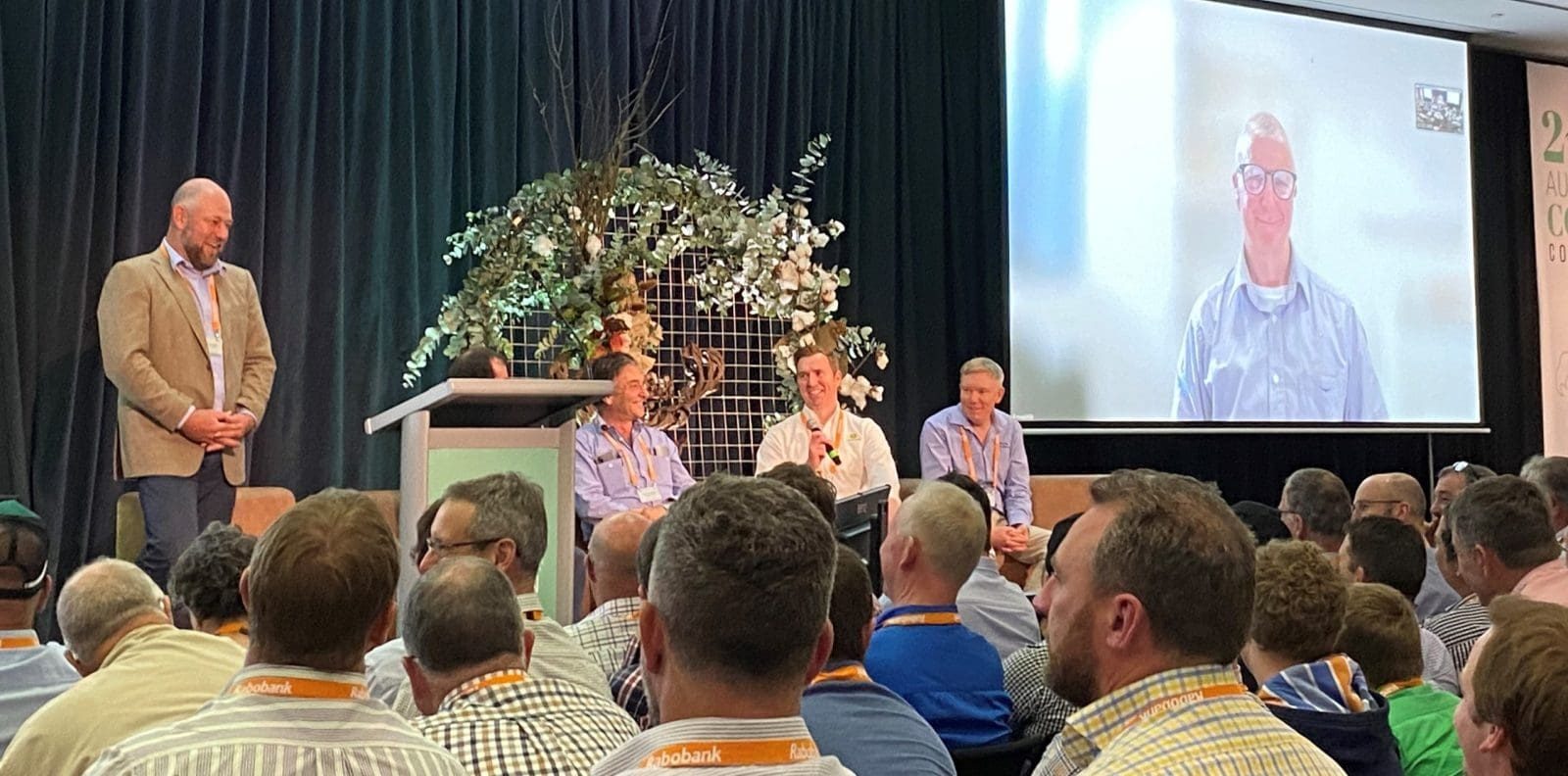
At the recent Australian Cotton Conference held on the Gold Coast, advancements in cotton farming were the focal point, with a particular emphasis on the integration of robotics, satellite technology, and innovative weed control methods. The three-day event, attended by approximately 2800 delegates, showcased how these cutting-edge technologies are set to transform the cotton industry by enhancing sustainability and efficiency.
James Pursehouse of Pursehouse Farms and Rob Eveleigh, representing Gary Coulton and Eveleigh Agronomics, shared their experiences with the SwarmFarm SwarmBot unit. This robotic system, used on their cotton farms in New South Wales, is a significant leap forward in precision agriculture. The SwarmBot, equipped with WeedIT Quadro cameras, operates efficiently over large areas, providing accurate and automated weed control.
The SwarmBot, affectionately named Mooki by Pursehouse Farms, features a 1500-litre tank and a high-clearance design that allows it to cover up to 9.7 hectares per hour with minimal fuel consumption. Pursehouse noted that the robot’s ability to operate unsupervised and during off-hours has greatly enhanced staff productivity and operational flexibility. The SwarmBot’s introduction has prompted a shift from reactive to proactive fallow spraying, illustrating its value in modern farming practices.
Rob Eveleigh’s operation, which covers 1400 hectares across three non-contiguous farms, has also benefited from the SwarmBot’s capabilities. Eveleigh highlighted the robot’s efficiency in handling undulating terrain and its role in freeing up time for other farm activities. He anticipates further enhancements, such as a dual battery system and improved fenceline spraying functions, to maximize the robot’s utility.
In addition to robotic advancements, DataFarming’s Tim Neale discussed the impact of satellite technology on weed control. DataFarming’s use of high-resolution satellite imagery is revolutionizing the approach to herbicide application. By generating precise spray maps through buffered algorithms, farmers can target weeds more effectively and reduce herbicide usage. This approach aligns with ongoing efforts to combat herbicide resistance and optimize application efficiency.
Neale emphasized that the reduction in satellite image capture time from two days to one hour, with future resolutions reaching 10 cm pixel accuracy, will further enhance the technology’s effectiveness. The increased frequency of satellite captures is expected to provide more accurate and timely data for weed management.
Finally, Charles Sturt University researcher Michael Walsh highlighted emerging weed control technologies from the US. These include the WeedErase, a non-chemical solution using blue light and infrared radiation, and the Weed Seed Destroyer, which applies similar technology to chaff. Walsh’s insights into these novel methods underscore the global progress in weed management and their potential applications in Australia.
The conference underscored a collective drive towards integrating advanced technologies in cotton farming, aiming to achieve greater efficiency, sustainability, and precision in agricultural practices.
Error