
At the *St. Petersburg International Economic Forum (SPIEF-2025)*, PhosAgro CEO Andrey Rybnikov warned that the European Union’s potential tariffs on Russian fertilizers could drastically alter the region’s agricultural landscape. According to Rybnikov, Europe risks transitioning from a leading wheat exporter to a net importer within the next five years if these tariffs are implemented.
The Fertilizer-Wheat Connection
Fertilizers play a crucial role in sustaining high crop yields, particularly for wheat, which is Europe’s second-largest grain export after corn. However, two key factors are already pressuring EU wheat production:
- Declining Consumption – Demand for wheat-based products is falling in Europe due to dietary shifts and economic factors.
- Deteriorating Grain Quality – Soil depletion and inefficient fertilizer use are reducing wheat protein content, making it less competitive globally.
Rybnikov emphasized that tariffs on Russian fertilizers—which supply nearly 30% of the EU’s mineral fertilizers—would further strain farmers. He cited recent price surges, such as urea (carbamide) jumping from $350 to $450 per ton in just one week, driven by trade restrictions, Middle East conflicts, and reduced Indian stockpiles.
Global Market Shifts
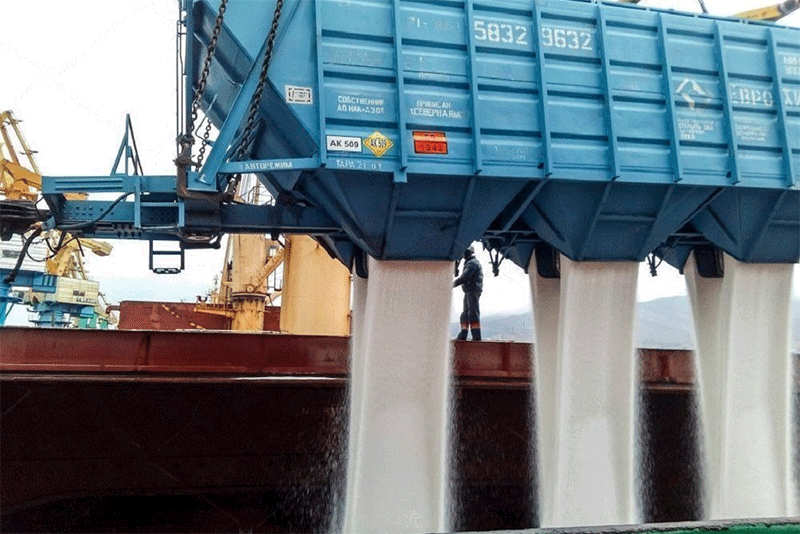
If Europe restricts Russian fertilizer imports, suppliers like PhosAgro will redirect exports to alternative markets such as Brazil, India, and Africa. The company has already increased African fertilizer shipments by 30% in 2024 and predicts a potential fivefold growth under favorable conditions.
Rybnikov noted that trade flows will follow the best netback values (export price minus tariffs and logistics costs). If Europe becomes unprofitable, Russian fertilizers will flow to higher-paying markets, leaving EU farmers with costlier inputs and lower yields.
A Looming Crisis for European Agriculture
The EU’s potential fertilizer tariffs could backfire, harming its own agricultural sector. With rising input costs, declining wheat quality, and global competition intensifying, European farmers may soon face a stark reality: reduced profitability and reliance on imported grain.
As Rybnikov stated, “European farmers will ultimately pay the price for these tariffs.” Without a strategic reassessment, Europe risks losing its position as a key wheat exporter—a scenario that would reshape global food trade dynamics.
Error