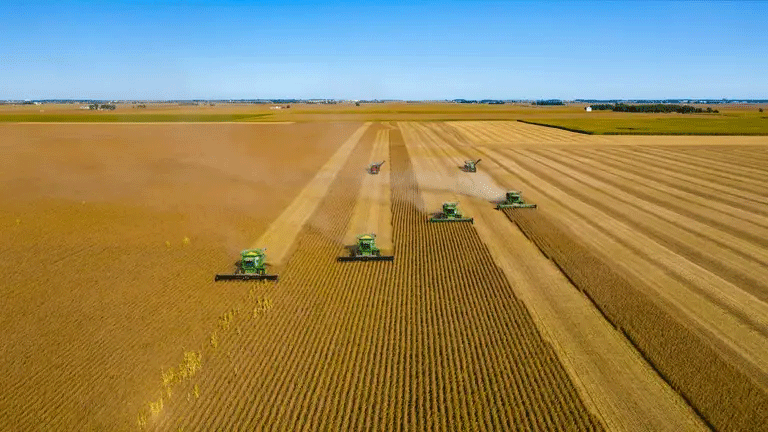
European agriculture is poised for a year of exceptional abundance. The latest forecast from COCERAL, the European association of trade in cereals, oilseeds, pulses, animal feed, and agro-supplies, has been significantly upgraded. The total grain harvest in the EU-27 and the UK for 2025 is now projected to reach 306.8 million tonnes, a sharp increase from the 279.1 million tonnes harvested in 2024 and an upward revision from the June estimate of 300.7 million tonnes.
This surge is largely fueled by expectations of a record wheat harvest, alongside a barley crop that could be the largest in a decade. The favorable conditions for these winter crops contrast with the outlook for maize (corn), whose production is anticipated to decline due to unfavorable weather during its sowing and growth periods. This divergence highlights how different crop phenologies lead to varying impacts from the same seasonal conditions. According to a recent update from the European Commission’s Mars Bulletin, much of Western and Northern Europe has experienced adequate soil moisture and temperate conditions, ideal for wheat and barley development, while parts of Southern and Eastern Europe have faced delays and challenges for spring-sown crops like maize.
The prospect of a record European harvest carries significant implications for global grain markets. The European Union is one of the world’s top wheat exporters, and a large domestic supply will increase its competitiveness in key import markets such as North Africa and the Middle East. This could intensify competition for other major exporters, including Russia and the United States. Data from the International Grains Council (IGC) suggests that increased exportable supplies from the EU could place downward pressure on international wheat prices in the latter half of 2025, a crucial factor for farmers and traders worldwide to monitor.
The forecasted record grain harvest in Europe signals a potential shift towards a well-supplied global market in 2025. For European farmers, this abundance may lead to logistical challenges and pressure on local prices, emphasizing the need for efficient marketing and storage strategies. For their counterparts in competing export nations, it underscores the necessity of cost efficiency and market diversification. For the global agricultural community, this projection serves as a reminder of the inherent volatility and interconnectedness of the grain trade, where climatic fortune in one major region can ripple through the entire world market.
Error