• About
  • Advertise
  • Careers
  • Contact
Friday, December 12, 2025
  • Login
No Result
View All Result
Field Crops news
  • Home
  • News
  • AgroTech & Innovation
  • Science
  • Sustainability
  • Market News
  • Research & Development
  • Home
  • News
  • AgroTech & Innovation
  • Science
  • Sustainability
  • Market News
  • Research & Development
No Result
View All Result
Field Crops news
No Result
View All Result
Home Research & Development

Ergot of cereals

by Maria YEROKHOVA
17 July 2024
in Research & Development
0
Ergot of cereals
0
SHARES
12
VIEWS
Share on FacebookShare on Twitter

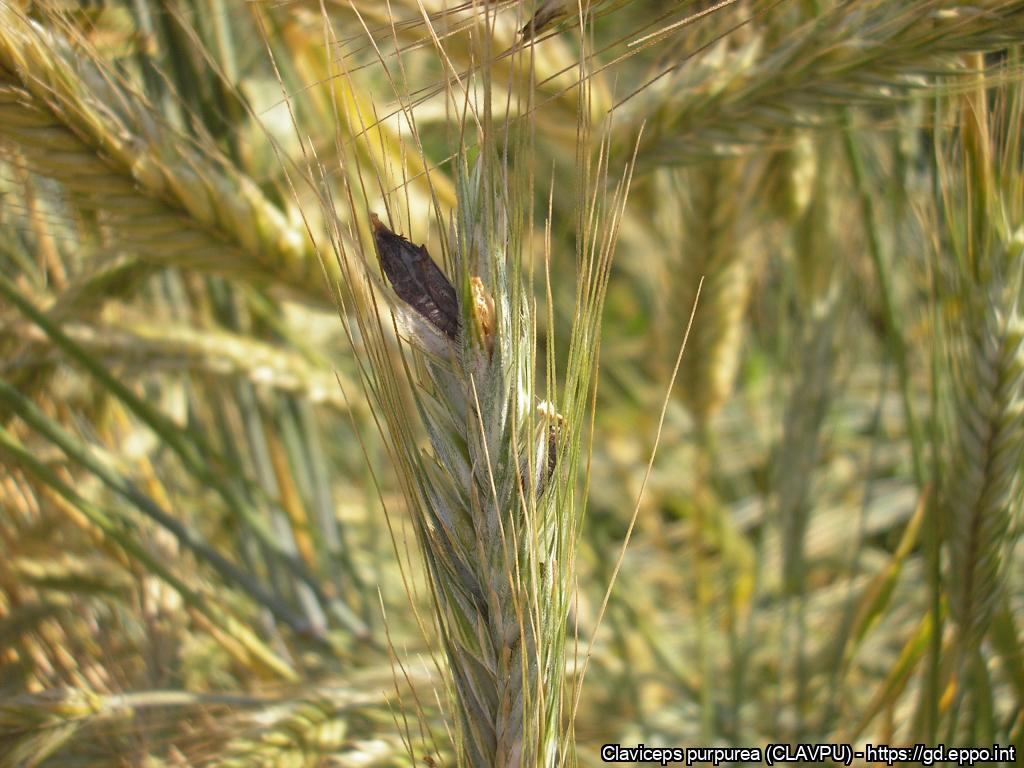
Ergot is a fungal disease of many plants but is perhaps most commonly associated with domesticated grasses or cereals, such as rye, wheat, barley, oat, sorghum, millet, maize and rice.

\Ergot is of historical significance, having been reported for several millennia, but is also of concern in modern agricultural production systems. Caused by many different species within the genus Claviceps, the fungi cause the production of sclerotia, which are typically dark in colour, in place of healthy grain. The sclerotia contain toxins that can make the grain unsafe for consumption by humans or livestock. Ergot can be managed both preharvest as well as postharvest to minimize the presence of sclerotia and their associated toxins in food and feed systems.

Management practices have been developed to control or mitigate the effects of ergot in crops, but none have been found to be effective or successful on their own. Therefore, an integrated management approach is typically recommended.

Photo: EPPO (2024) EPPO Global Database. https://gd.eppo.int

Reference: Berraies, S., Liu, M., Menzies, J.G., Tittlemier, S.A., Overy, D.P. & Walkowiak, S. (2024) Ergot of cereals: Toxins, pathogens and management. Plant Pathology, 73, 1301–1316. Available from: https://doi.org/10.1111/ppa.13904

Error

Tags: cerealsErgot

Maria YEROKHOVA

Next Post
Harvesting Success: Qitai County’s Wheat Season in Xinjiang and Its Global Impact

Harvesting Success: Qitai County’s Wheat Season in Xinjiang and Its Global Impact

Newsletter

Revolutionizing Salt-Stress Management: Potassium and Thiourea Synergy in Wheat Cultivation

Revolutionizing Salt-Stress Management: Potassium and Thiourea Synergy in Wheat Cultivation

2 May 2025

Kazakhstan Shatters Grain Export Records: New Markets and Strategic Growth

15 August 2025

Scaling New Heights: The Future of Greenhouse Horticulture

24 July 2024

Navigating Shifts in Turkey’s Wheat Import Policies: Impacts on Domestic Production and Global Trade

5 March 2025

Punjab Gears Up for Bumper Wheat Harvest: 124 Lakh Metric Tonnes Set for Procurement

1 April 2025

In-Field Analytics: How Mobile Labs are Shaping Harvest Strategy in Russia’s Kursk Region

15 November 2025

Soybean Harvest Begins in the U.S.: A Look at Early Progress and Crop Conditions

20 September 2024

Tunisia Secures 75,000 Tons of Soft Wheat Amid Competitive Global Bidding

26 April 2025

Wheat Procurement Begins in Mallpur and Nalagarh: What Farmers Need to Know for the 2025-26 Rabi Season

10 April 2025

Advancements in Barley Yellow Dwarf Virus (BYDV) Detection: A Game-Changer for Crop Management

16 January 2025
  • About
  • Advertise
  • Careers
  • Contact
Call us: +51 93 999 5140

© 2020-2024 Field Crops news

Welcome Back!

Login to your account below

Forgotten Password?

Retrieve your password

Please enter your username or email address to reset your password.

Log In
No Result
View All Result
  • Home
  • News
  • Science
  • Sustainability
  • AgroTech & Innovation
  • Market News
  • Science
  • Research & Development
  • About
  • Contact

© 2020-2024 Field Crops news