
• About
  • Advertise
  • Careers
  • Contact
Friday, December 5, 2025
  • Login
No Result
View All Result
Field Crops news
  • Home
  • News
  • AgroTech & Innovation
  • Science
  • Sustainability
  • Market News
  • Research & Development
  • Home
  • News
  • AgroTech & Innovation
  • Science
  • Sustainability
  • Market News
  • Research & Development
No Result
View All Result
Field Crops news
No Result
View All Result
Home Import

Egypt’s Wheat Procurement Falls Short: Implications for Farmers and Global Markets

by Tatiana Ivanova
3 July 2025
in Import, News, Storage
0
Egypt’s Wheat Procurement Falls Short: Implications for Farmers and Global Markets
0
SHARES
1
VIEWS
Share on FacebookShare on Twitter

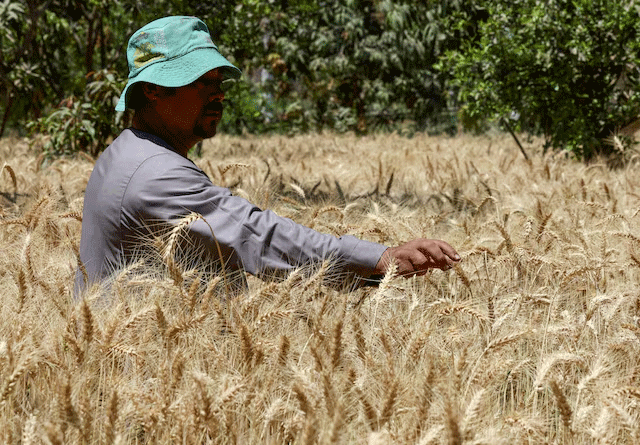
Recent government documents reviewed by Reuters reveal that Egypt has begun closing local wheat collection centers ahead of schedule as procurement falls short of expectations. The government had aimed to purchase 4 to 5 million metric tons (MMT) from an estimated 10 MMT harvest, but as of mid-season, only 3.9 MMT had been collected. This shortfall comes amid economic strains and high inflation, complicating Egypt’s efforts to maintain its subsidized bread program, which feeds 70 million people—over 60% of the population (World Bank, 2025).

Domestic Challenges and Global Market Pressures

Egypt, the world’s largest wheat importer, typically supplements its domestic supply with 5 MMT of imports annually. However, import volumes in early 2025 have lagged behind previous years, exacerbating supply concerns. Prime Minister Mostafa Madbouly has assured that strategic reserves remain sufficient for over six months, but long-term stability depends on stabilizing procurement and global trade flows.

Farmers are delivering less wheat to collection centers, prompting authorities to shut down underperforming locations. Officials note that centers receiving no wheat for 3-5 consecutive days will also close, signaling a faster-than-expected end to the harvest season.

Broader Implications for Agriculture and Trade

The shortfall highlights vulnerabilities in Egypt’s food security strategy, particularly as global wheat prices remain volatile due to the Russia-Ukraine conflict and climate-related disruptions (FAO, 2025). For farmers and agronomists, this underscores the need for:

  • Higher-yielding wheat varieties to boost domestic production.
  • Efficient grain storage to reduce post-harvest losses.
  • Policy adjustments to incentivize farmer participation in government procurement programs.

For global markets, Egypt’s reduced purchases may soften demand temporarily, but long-term reliance on imports keeps traders alert for shifts in procurement strategies.

Egypt’s wheat procurement challenges reflect deeper systemic issues—economic pressures, reliance on imports, and farmer disengagement from state-led collection. Strengthening domestic production through sustainable farming practices and better policy frameworks will be crucial for food security. Meanwhile, global suppliers must monitor Egypt’s import patterns, as any sudden increase in demand could tighten international markets.

Error

Tags: Agricultural Economicsagricultural policycrop yieldsEgypt wheat shortagefarming challengesfood securityglobal grain marketssubsidized bread programWheat ImportsWheat Procurement

Tatiana Ivanova

Next Post
Shutilovka Station Showcases 380 Crop Varieties: The Future of Russian Agriculture

Shutilovka Station Showcases 380 Crop Varieties: The Future of Russian Agriculture

Newsletter

Kursk Region’s Grain Exports Surge in First Half of 2024

Kursk Region’s Grain Exports Surge in First Half of 2024

14 July 2024

Rain Brings Hope for Winter Wheat as Drought Conditions Persist Across US Plains

12 November 2024

WASDE Numbers Trigger a Three Percent Drop in US Wheat Prices

15 July 2024

Russia’s Best-Selling Corn Hybrid: Why Krasnodarsky 291 AMV Is Leading the Fields

23 March 2025

Streamlining Crop Breeding: Innovations in the Philippines’ Agricultural Laboratories

15 October 2024

Corn Beyond the Cob: The Award-Winning “Asa-nama Corn” Now in Gelato

3 September 2024

Armenia Seeks Alternatives to Russian Wheat Imports Amid Economic Challenges

7 November 2024

Beyond Harvest: How Cover Crops Slash Soil Erosion by 99% on Sloped Fields

17 September 2025

Pioneering Plant-Based Protein: Moolec Science’s USDA Approval for Genetically Modified Peas

24 October 2024

Cracking Down on Grain Quality: Omsk Region’s Stricter Controls and What It Means for Agriculture

21 May 2025
  • About
  • Advertise
  • Careers
  • Contact
Call us: +51 93 999 5140

© 2020-2024 Field Crops news

Welcome Back!

Login to your account below

Forgotten Password?

Retrieve your password

Please enter your username or email address to reset your password.

Log In
No Result
View All Result
  • Home
  • News
  • Science
  • Sustainability
  • AgroTech & Innovation
  • Market News
  • Science
  • Research & Development
  • About
  • Contact

© 2020-2024 Field Crops news