

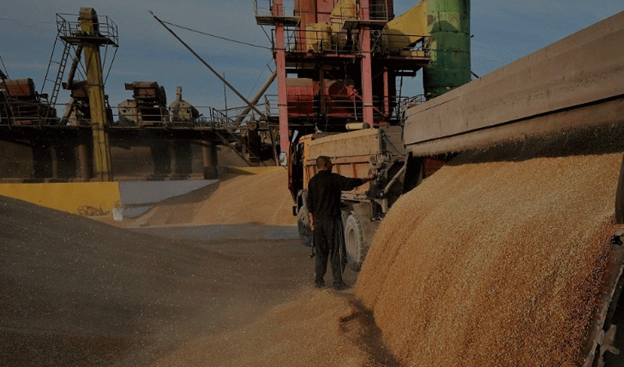
In December of last year, Egypt transitioned its wheat procurement responsibilities from the state-run General Authority for Supply Commodities (GASC) to a new, lesser-known agency, Mostakbal Misr. While GASC’s tenders, though private, provided traders with valuable insights into supply volumes and pricing, the new system under Mostakbal Misr has raised concerns about transparency and market reliability.
GASC was well-established in the global grain market, with years of experience handling wheat procurement from numerous countries. This allowed traders access to crucial data about wheat origin, supply levels, and tender pricing, even if the processes were conducted behind closed doors. However, with the replacement of GASC, traders are now facing difficulties in tracking the details of wheat transactions. The most significant challenge is the lack of information regarding the frequency of tenders under Mostakbal Misr. In addition, the new agency’s management of wheat procurement remains unclear, particularly in terms of ensuring consistent supply, as GASC had longstanding relationships with suppliers across the globe.
Matt Ammerman, risk manager at StoneX, has highlighted the uncertainty surrounding the operational model of Mostakbal Misr, pointing out that traders are still unsure about the reliability and structure of the new procurement process. The market remains skeptical, particularly after a failed negotiation in late November, when the new agency canceled plans for direct wheat purchases due to unclear sales terms. This uncertainty is further compounded by the lack of a clear understanding of how Mostakbal Misr plans to replace the logistical capabilities of GASC, which had extensive experience in dealing with wheat traders worldwide.
Despite the opacity, some recent trade deals with Russia have emerged. In late December, Russia shipped 28,000 tons of wheat to Egypt, and at the start of the new year, 33,000 tons were contracted for private sale. These transactions, while notable, highlight the continuing complexity of the market, as traders strive to navigate the changing procurement environment.
The new wheat procurement mechanism in Egypt presents significant challenges for the agricultural trade community. With a lack of transparency around tender processes and procurement terms, traders face uncertainty in determining supply levels, prices, and the origins of wheat shipments. As the market adjusts to this new system, it is crucial for farmers, agronomists, and agricultural engineers to stay informed about developments in Egypt’s wheat procurement strategy, as these changes could impact global trade flows, pricing, and supply chains.
Error