
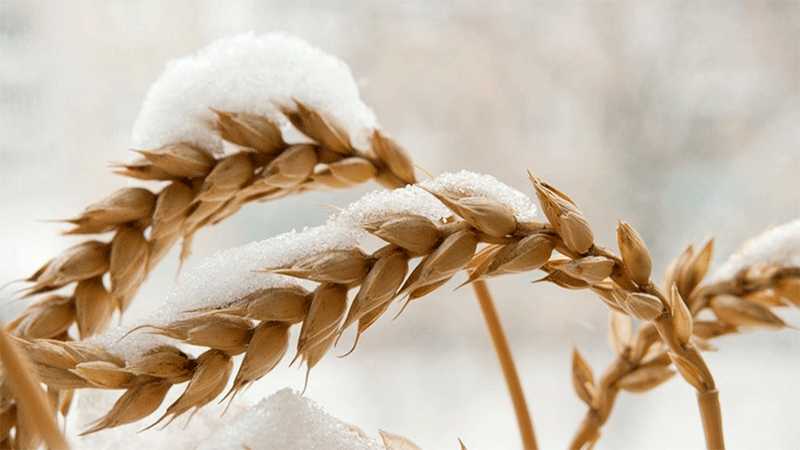
In a disruptive turn of events, the Kostanay region of Kazakhstan—a cornerstone of the country’s grain belt—is experiencing significant snowfall, with temperatures hovering between -2°C and -4°C. This early winter weather arrives as the harvest campaign is in full swing, creating a high-risk scenario for unharvested fields. According to Yevgeny Karabanov of the Grain Union of Kazakhstan, the weight of the snow can lodge (flatten) standing grain, leading to broken stems and heads, which directly translates to yield loss and challenges for combining.
Beyond immediate physical damage, the event highlights a critical and compounding issue: the rapid degradation of grain quality in over-ripe crops. Karabanov succinctly noted, “Of course [quality will worsen]. It worsens every day when the grain over-stands.” This concern is amplified by pre-existing conditions. Prior reports from Kazakhstan’s Prodcorporation had already indicated that a rainy harvest season was causing a shift in the new crop’s structure, with a predominance of Class 4 and 5 wheat over higher-quality Class 3. Early snow and frost exacerbate this problem by potentially increasing moisture content, promoting disease in lodged crops, and leading to pre-harvest sprouting or staining, all of which can downgrade grain.
This situation in Kazakhstan is a localized example of a global agricultural challenge. A 2023 study in the journal Nature Food emphasized that climate change is increasing the frequency of extreme weather events during critical crop windows, such as harvest. The financial impact is severe; data from grain trading platforms consistently shows a price discount of 15-30% or more for lower-class wheat (e.g., Class 4/5) compared to high-protein milling grades, directly cutting into farm gate revenue.
The early snowfall in Kostanay is a stark reminder that a successful harvest is measured not just in volume, but in preserved quality. As climate patterns become more unpredictable, the agricultural sector must prioritize strategies that mitigate such risks. This includes adopting earlier-maturing crop varieties to shorten the vulnerable harvest window, investing in grain drying and storage infrastructure to manage wet harvests, and enhancing weather monitoring and rapid response capabilities. For farmers and the entire supply chain, the lesson is clear: resilience against quality loss is as important as the pursuit of high yields.
Error