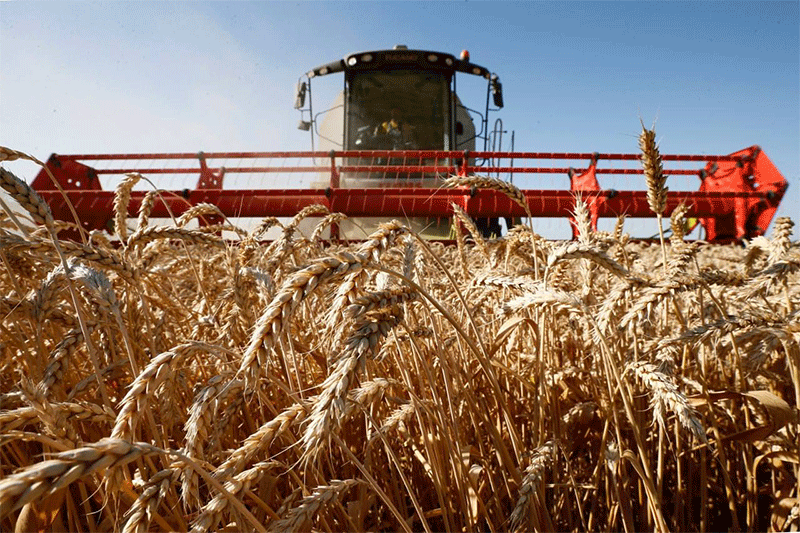
The agricultural sector of Russia’s Krasnodar Krai has demonstrated remarkable resilience in the face of significant climate challenges, maintaining crucial export partnerships despite substantial production shortfalls. In July 2025, the region exported over 209,000 tonnes of grains and processing products to Turkey, with inspectors from the Southern Office of Rosselkhoznadzor confirming full compliance with all phytosanitary requirements. This export achievement comes despite the region facing one of its most challenging growing seasons in recent memory due to persistent drought conditions.
The export breakdown reveals strategic market positioning: wheat led shipments at 90,300 tonnes, followed by corn at 47,600 tonnes and barley at 33,300 tonnes. This export maintenance during a production crisis highlights the region’s commitment to honoring international contracts and preserving market share. The emphasis on strict adherence to transportation and certification rules underscores the importance of quality preservation in maintaining export relationships during supply-constrained periods.
These exports occurred against a backdrop of severe production challenges. As previously reported, southern regions—particularly Krasnodar Krai and Rostov Oblast—faced significant harvest losses due to dry spring and early summer conditions. Krasnodar’s grain shortfall reached approximately 2.8 million tonnes, representing an estimated 42 billion ruble loss (based on average prices of 15,000 rubles per tonne). In some areas of Kuban, grain yields plummeted to 20-30 centners per hectare—2-3 times lower than previous year’s levels—prompting emergency measures to enable insurance payments and government support for affected farmers.
The drought has exacerbated existing agricultural sector challenges, including high logistical costs, export duties, and inefficiencies in outdated farming models. According to the FAO’s 2025 Global Food Outlook, climate-induced production volatility is increasingly affecting major exporting regions, with drought-related yield reductions becoming more frequent across Black Sea agricultural areas. Despite these challenges, Kuban farmers are actively pursuing adaptation strategies, implementing modern technologies, revising planting structures, and developing more climate-resilient agricultural practices.
Krasnodar Krai’s ability to maintain substantial grain exports during a severe production crisis demonstrates both the strategic importance of preserving international trade relationships and the resilience of modern agricultural supply chains. While climate challenges have caused significant economic losses, the region’s continued export performance highlights the effectiveness of quality management and phytosanitary compliance in maintaining market access. For agricultural professionals worldwide, Kuban’s experience offers valuable lessons in balancing domestic production challenges with international obligations, while underscoring the urgent need for climate adaptation strategies, modernized farming practices, and diversified risk management approaches in an era of increasing climate volatility.
Error