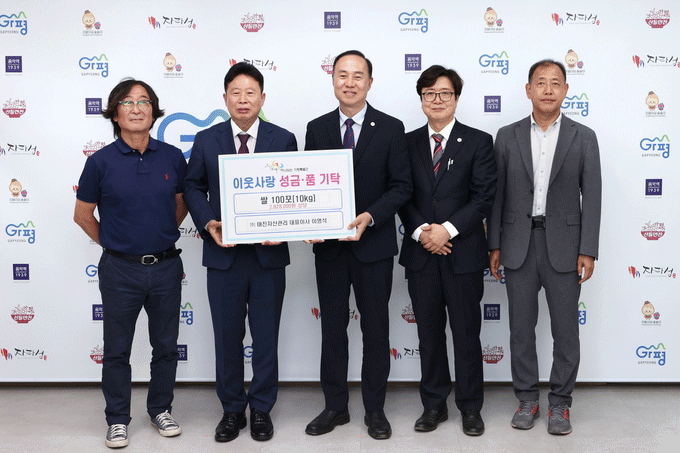
As global food prices surge and economic pressures mount, vulnerable farming households face increasing challenges. In early June, Taejin Asset Management donated 100 bags of rice to low-income families in Gapyeong County, South Korea, reinforcing the role of private-sector support in agricultural welfare.
The Growing Need for Food Aid in Rural Areas
According to the UN Food and Agriculture Organization (FAO), global food prices remain 27% higher than pre-pandemic levels, disproportionately affecting rural communities. In South Korea, the Ministry of Agriculture, Food, and Rural Affairs (MAFRA) reports that 12.5% of rural households experience food insecurity, highlighting the importance of corporate and government assistance programs.
Taejin Asset Management, established in 1983, has a long-standing commitment to social contribution, including scholarships and donations to underprivileged groups. This recent rice donation aligns with broader trends where agribusinesses and asset firms step in to bridge gaps in food accessibility.
Local Government and Private Sector Collaboration
Gapyeong County Mayor Seo Taewon emphasized the importance of sustained charitable efforts, stating that such initiatives help build a “more prosperous Gapyeong.” Similar programs worldwide, like the USDA’s Farmers to Families Food Box Program, demonstrate how public-private partnerships can stabilize food supply chains during crises.
Strengthening Agriculture Through Shared Responsibility
Corporate social responsibility (CSR) in agriculture is not just charity—it’s an investment in food security and rural resilience. As inflation and supply chain disruptions persist, continued collaboration between businesses, governments, and farmers will be essential to safeguarding vulnerable communities.
Error