

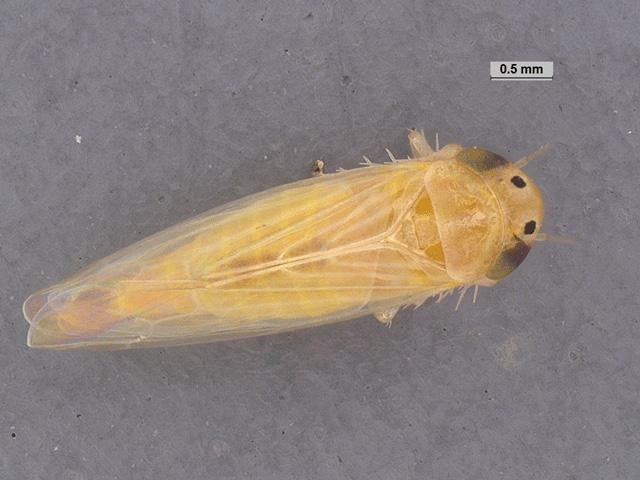
The corn leafhopper (Dalbulus maidis), a tiny but destructive pest, has recently been found in south-central Kansas and multiple Missouri counties, signaling a growing threat to U.S. corn production. Historically confined to Central and South America, this insect has expanded its range into major corn-growing states, including Illinois, Iowa, Minnesota, and Nebraska in 2024—a concerning shift attributed to changing climate conditions and increased pest mobility.
Rodrigo Onofre, a row crop plant pathologist at Kansas State University, confirmed leafhopper presence in Reno County, Kansas, on July 9. Shortly after, University of Missouri entomologist Ivair Valmorbida reported detections in Lawrence and Boone counties. Valmorbida noted that last year’s corn stunt outbreaks in southwest Missouri were linked to leafhopper activity in July, with symptoms appearing 30–40 days later.
Yield Losses and Disease Transmission
Corn stunt disease, caused primarily by the bacterium Spiroplasma kunkelii, leads to severe yield reductions. In South America, where the pest is well-established, complete crop loss has been documented. Symptoms include:
- Chlorosis (yellowing) or reddening of leaf tips
- Stunted growth
- Multiple small ears with poorly filled kernels
Beyond direct feeding damage, leafhoppers excrete honeydew, promoting black sooty mold that disrupts photosynthesis. However, the greater risk lies in their ability to transmit pathogens. Valmorbida warns that infections occurring around the V5 growth stage can lead to significant yield declines, while later infestations (post-tasseling) pose minimal risk.
Scouting and Management Strategies
Since there is no established economic threshold for corn leafhoppers, proactive scouting is essential. Valmorbida recommends:
- Yellow sticky traps
- Sweep nets
- Visual inspections (leafhoppers are rice-sized and may be confused with aster leafhoppers)
Key Management Practices:
- Early Planting – Reduces exposure to peak leafhopper activity.
- Insecticidal Seed Treatments – Effective up to the V3 stage.
- Foliar Insecticides – Broad-spectrum options (e.g., pyrethroids) are recommended if leafhoppers are detected before reproductive stages.
However, Onofre cautions that multiple pest generations and delayed symptom onset make preventive measures more reliable than reactive sprays.
With corn leafhoppers spreading into new regions, farmers must prioritize early detection and integrated pest management to mitigate corn stunt disease risks. Timely scouting, strategic insecticide use, and resistant hybrids (where available) will be crucial in protecting yields.
Error