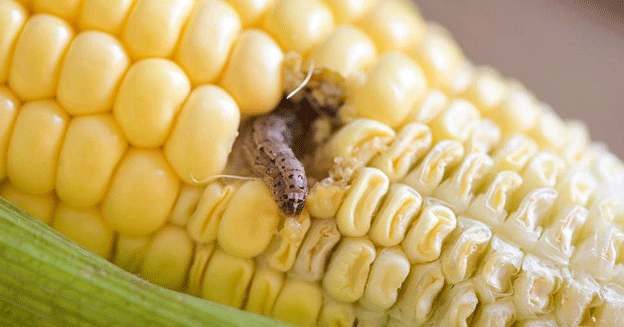
As maize crops across France progress through their growth cycle, the threat of the European corn borer (Ostrinia nubilalis) is becoming more apparent. While initial observations indicated low pest pressure, recent data shows that vigilance is required in several regions. The chambers of agriculture are urging maize growers to deploy pest control measures early, particularly in areas where the borer’s presence has intensified.
The European corn borer is a notorious pest that can significantly reduce maize yields by boring into stems and ears, leading to plant damage and increased susceptibility to diseases like fusarium. The situation varies greatly across France, with some regions experiencing higher risks than others. Below is an overview of the current state of play in key maize-growing areas.
Île-de-France: Rising Corn Borer Activity
In the Île-de-France region, maize plants are at a developmental stage of 10 to 16 leaves. Recent observations have shown a notable increase in corn borer activity since early July, with the peak flight expected between July 20 and 25. The local chamber of agriculture advises farmers who have not yet done so to quickly deploy trichogramma dispersers, a biological control method. While there is no cause for alarm, as pest pressure is still lower than the multi-year average, timely intervention should prevent major damage.
Bourgogne-Franche-Comté: High Risk After a Wet Spring
In Bourgogne-Franche-Comté, the region experienced an unusually wet spring, leading to delayed planting and uneven crop development. Maize fields currently range from 8 to 16 leaves, depending on planting dates. The presence of the corn borer has been confirmed in the southern parts of the region, particularly in Nièvre, Saône-et-Loire, Jura, and Côte-d’Or. The risk is considered high, although the peak flight may have already passed. Early intervention remains essential for reducing damage.
Grand Est: Moderate Pressure, But Vigilance Needed
Lorraine, part of the Grand Est region, has also seen varied maize development, with plants ranging from 8 to 17 leaves. Here, corn borer pressure remains relatively low, with pheromone traps capturing an average of 3.8 moths per trap. No egg-laying has been observed so far, but experts caution that the flight is ongoing, and a potential increase in pest activity could occur in late July. Continuous monitoring is advised to prevent any sudden outbreaks.
Pays de la Loire: A Second Flight Expected
On the Atlantic coast, maize fields in the Pays de la Loire region have reached an average of 20 leaves, although plant development remains heterogeneous. The first corn borer flight appears to have passed in Loire-Atlantique and Sarthe, with low population densities recorded. However, a second flight is anticipated in Maine-et-Loire, where recent trap data shows increasing moth activity. Farmers are advised to stay alert and prepare for additional pest control measures if necessary.
Poitou-Charentes: Widespread Corn Borer Presence
In the Poitou-Charentes region, maize plants are generally between 10 and 19 leaves, with favorable growing conditions since mid-June. The corn borer is widely present, with flight activity increasing across the region. The northern part of Vienne is particularly affected, and farmers in this area are urged to remain vigilant. Additionally, a significant threat from another pest, the sesame leafroller (Sesamia spp.), has been reported, which poses a higher risk than the corn borer in some areas.
Auvergne-Rhône-Alpes: A Mixed Situation
In Auvergne-Rhône-Alpes, the western part of the region has seen relatively low corn borer pressure this season. However, in Rhône-Alpes, pest specialists are predicting a second generation of corn borers, particularly in the Drôme and Rhône Valley. Farmers are encouraged to release trichogramma agents as soon as possible in these areas. Furthermore, another pest, the cotton bollworm (Helicoverpa armigera), has been increasing in numbers, especially in Isère and Drôme. Although its direct impact on yields is typically low, it can facilitate fungal infections like fusarium, which can be more damaging.
Conclusion: Early Action and Ongoing Monitoring Are Key
The resurgence of the European corn borer in several French regions underscores the importance of early action and consistent monitoring. While some areas are experiencing moderate pressure, others are seeing an increase in pest activity that could affect maize yields if not addressed promptly. Farmers are advised to deploy biological controls, such as trichogramma dispersers, and to remain vigilant throughout the growing season. With proper management, the impact of these pests can be mitigated, ensuring healthier crops and more stable yields.
Error