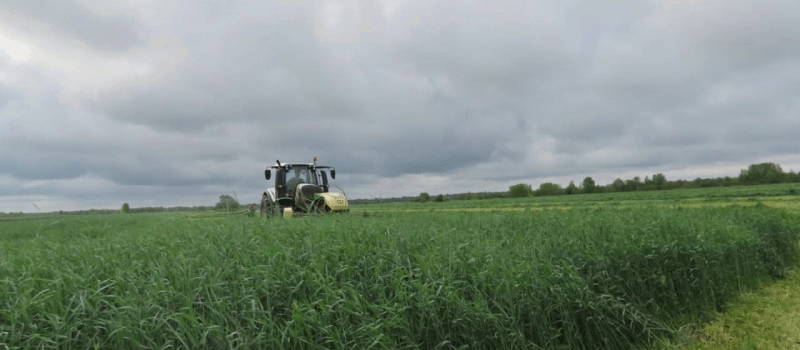
Recent inspections by Rosselkhoznadzor (Russia’s agricultural watchdog) revealed that 36.9 metric tons of contaminated feed barley were shipped from Mordovia to Karelia. The grain, treated with undisclosed pesticides and agrochemicals, lacked proper documentation, leading authorities to void its compliance declaration and issue a formal warning to the supplier.
This incident follows a similar case in which barley from Ulyanovsk—also tainted with unauthorized chemicals—entered Karelia’s feed supply. Such repeated violations underscore systemic risks: unchecked pesticide use in feed crops can accumulate in livestock, threaten food safety, and disrupt trade.
The Bigger Picture: Pesticide Risks in Agriculture
Globally, 24% of animal feed samples tested in 2023 contained pesticide residues above safe limits (*FAO/WHO Joint Report, 2023*). In the EU, 15% of feed imports were rejected last year due to chemical contaminants (EFSA, 2024). Russia’s reliance on domestic feed grains—often produced with heavy agrochemical use—demands tighter traceability, especially as global buyers enforce stricter residue thresholds.
Solutions: Transparency and Technology
- Blockchain traceability: Pilot projects in Brazil reduced feed contamination incidents by 30% by digitizing supply chains (AgriTech Journal, 2023).
- Rapid testing: Portable spectrometers now detect pesticides in grains within minutes, cutting lab delays (Journal of Agricultural Science, 2024).
- Regulatory harmonization: Aligning Russia’s limits with Codex standards could prevent future breaches.
The Karelia incidents are a wake-up call: as pesticide misuse jeopardizes feed safety, the industry must adopt real-time monitoring, stricter audits, and harsher penalties for non-compliance. Farmers and processors investing in clean practices will gain a competitive edge in increasingly regulated markets.