In an era of environmental challenges and dwindling crop diversity, a unique initiative is bringing together citizens and scientists to safeguard one of humanity’s oldest and most nutritious crops: the garden bean. The INCREASE project, funded by the European Union since 2020, empowers everyday gardeners to participate in research aimed at preserving and understanding old and underutilized bean varieties.
Saving Beans Through Citizen Science
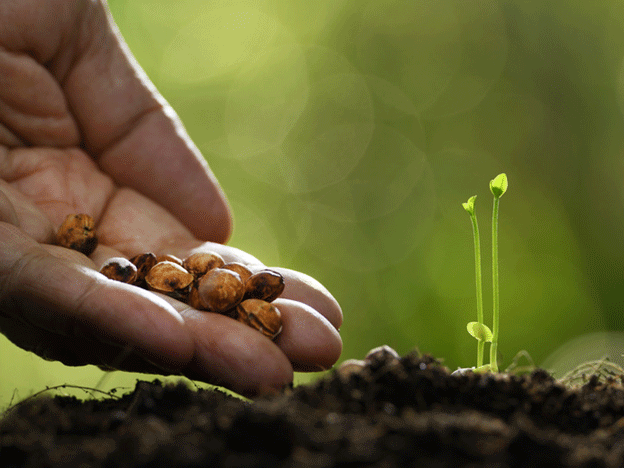
At the heart of the project lies a simple but powerful idea: mobilizing thousands of volunteers to grow, monitor, and document bean plants in diverse environments. Participants receive seeds of rare bean varieties, along with instructions on how to cultivate them. They use the project’s Citizen Science App to record data such as flowering times, seed sizes, and even detailed photos.
The initiative has grown exponentially, with participation soaring from 3,000 gardeners in its inaugural year to over 9,000 in 2024. These volunteers contribute essential data about how different bean varieties perform under various climate conditions across Europe. Recent findings reveal that flowering times in some bean varieties are strongly influenced by day length, a key factor for optimizing planting schedules.
Adapting to Climate Challenges
Despite extreme weather conditions across Europe since the project’s inception, the garden bean’s adaptability has been a beacon of hope. “The remarkable flexibility of the garden bean allows it to thrive in both the warm climates of Southern Europe and the cooler regions of the North,” explains Dr. Neumann, a lead scientist in the project.
This adaptability is crucial as Europe faces increasing climate variability. By documenting how beans respond to temperature shifts and rainfall patterns, citizen scientists provide data that can inform future agricultural practices. Accurate weather data collected by participants has further refined understanding of how climate factors influence growth and yield.
Building a Community Around Beans
Beyond its scientific aims, the INCREASE project fosters a sense of community among participants. Gardeners share their experiences, growing tips, and even traditional bean recipes. The ongoing “Citizen Science Photo, Video & Recipe Contest 2024” encourages participants to showcase their creativity while highlighting the cultural importance of beans in European diets.
Dr. Neumann describes the network as an “ecosystem of conservationists,” where knowledge exchange plays a pivotal role in keeping these valuable crops alive. Over 1,300 participants are regularly active in the project’s community, contributing not only data but also ideas for better resource management.
Recognition for Impact
The INCREASE project’s innovative approach has earned international acclaim. In 2024, it received the European Union Prize for Citizen Science at the Ars Electronica Festival in Austria. Additionally, its groundbreaking research on legume genetics was awarded the prestigious SEB-Wiley-TPJ Award for outstanding contributions to agricultural science.
The INCREASE project exemplifies the power of collaboration in tackling critical agricultural challenges. By combining citizen enthusiasm with scientific expertise, the initiative is not only safeguarding Europe’s bean heritage but also generating valuable insights into sustainable crop management. This project serves as a model for integrating communities into scientific efforts, offering hope for a resilient and diverse agricultural future.
Error