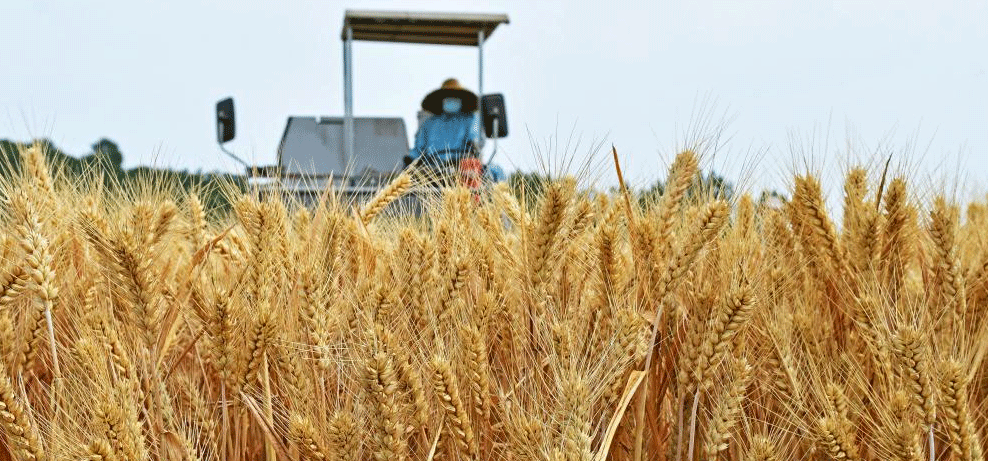
As of June 18, China’s large-scale mechanized wheat harvest for the “Three Summers” period (summer planting, summer management, and summer harvest) is 96% complete, according to the Ministry of Agriculture and Rural Affairs. This marks another successful season for the country’s grain production, with advanced machinery and optimized farming techniques playing a pivotal role.
Mechanization Drives Efficiency
This year’s harvest saw widespread use of combine harvesters and drone-assisted monitoring, particularly in major wheat-producing regions like Shandong Province, where drone images captured the final stages of harvesting. The shift toward fully mechanized farming has significantly reduced labor costs and improved yield consistency. Globally, precision agriculture is expected to grow at a 13.1% CAGR (2023–2030) (Grand View Research), and China’s adoption of smart farming aligns with this trend.
Climate Challenges and Yield Projections
Despite progress, climate variability remains a concern. The FAO’s 2024 report highlights that extreme weather events could reduce global wheat yields by 5-10% in vulnerable regions. However, China’s early-season planting strategies and drought-resistant wheat varieties have helped mitigate risks. Preliminary estimates suggest a stable output, though final figures will depend on post-harvest assessments.
The Road Ahead: Sustainable and Smart Farming
To maintain food security, experts emphasize:
- Expanding precision agriculture (IoT sensors, AI-driven analytics)
- Developing climate-resilient crops
- Optimizing supply chains to reduce post-harvest losses (currently 8-15% in developing nations, per World Bank).