Recent data from Kazakhstan’s Ministry of Agriculture reveals a seismic leap in agricultural trade with neighboring Turkmenistan. In the first nine months of 2025, the total agro-industrial trade turnover between the two nations reached $103 million, marking a staggering 37.5% increase compared to the same period last year. This growth is largely driven by a Kazakh export boom, with shipments of agricultural products soaring to $70 million—a 70% year-on-year increase.
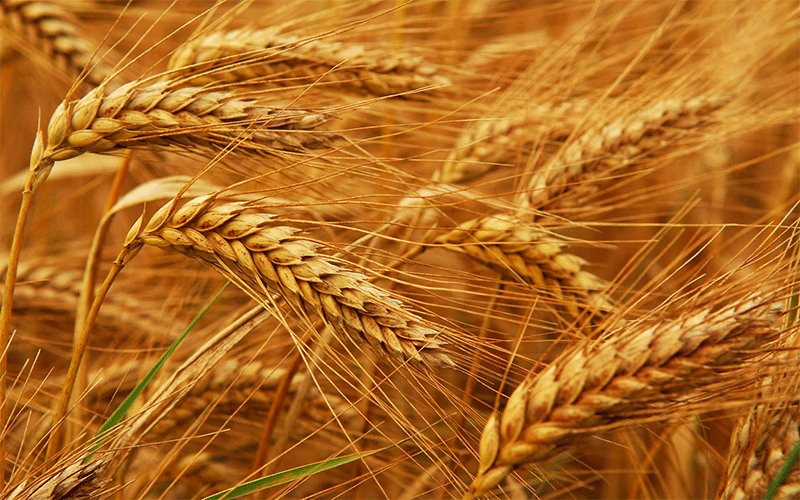
The standout performers in this export portfolio are wheat and flour. Official figures show that exports of high-quality wheat from Kazakhstan to Turkmenistan grew 1.5 times, while flour exports quadrupled. This surge has been complemented by the resumption of sunflower oil shipments, signaling a diversification of the trade basket beyond staple grains.
Strategic Talks and Future Ventures
This trade expansion was a central topic in high-level discussions between Kazakhstan’s Minister of Agriculture, Aidarbek Saparov, and his Turkmen counterpart, Charyyar Chertiyev. The Kazakh side affirmed its commitment to ensuring stable supplies of grain and flour and expressed a keen interest in establishing joint ventures on Kazakh soil. This move suggests a strategy to move beyond simple exports towards deeper, more integrated economic cooperation, potentially involving value-added processing.
The talks also covered enhanced collaboration in veterinary science, biosecurity, and trade in livestock products. Chertiyev acknowledged the “high potential of bilateral cooperation” and emphasized Turkmenistan’s readiness to actively implement joint projects, indicating a comprehensive partnership that extends far beyond the grain sector.
A Regional Shift in a Global Context
This rapid growth in Kazakhstan-Turkmenistan trade occurs against a backdrop of ongoing global supply chain reconfigurations. While not on the same scale as Black Sea exports, the strengthening of this Central Asian corridor enhances regional food security. For global market observers, it highlights the growing importance of intra-regional trade flows as countries seek to build more resilient and diversified food import sources.
The explosive growth in Kazakhstan’s agricultural exports to Turkmenistan is more than a statistical anomaly; it is a clear indicator of a strategic and deepening partnership. By leveraging its position as a reliable supplier of high-quality wheat and flour and pushing for joint ventures, Kazakhstan is solidifying its role as a Central Asian breadbasket. For agronomists, traders, and policymakers, this trend underscores the critical importance of regional trade alliances in creating stable and resilient food systems, independent of volatile global maritime routes.
Error