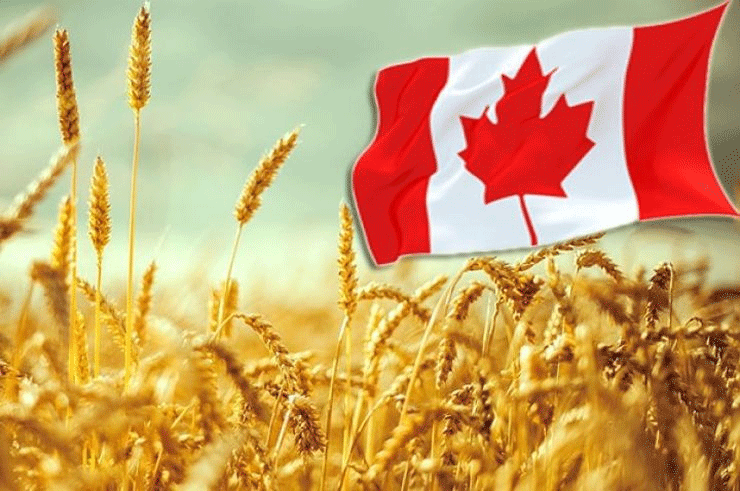
According to the latest report from the USDA’s Foreign Agricultural Service (FAS), Canada’s wheat production is forecast to increase by 2% in the 2025-26 marketing year, reaching 35.6 million metric tons (MMT)—the highest since the record 37.5 MMT harvest in 2013-14. This growth is attributed to a 2.6% year-over-year expansion in planted area, totaling 11.1 million hectares, as farmers respond to strong international demand for high-quality wheat.
Shifts in Wheat Acreage
Statistics Canada’s March planting intentions survey revealed key trends in wheat cultivation:
- Spring wheat leads the expansion, with 193,000 additional hectares planted.
- Durum wheat acreage remains stable.
- Winter wheat saw a 90,000-hectare increase, primarily in Ontario.
This diversification reflects strategic adjustments by Canadian farmers to align with market preferences and climatic conditions.
Export Outlook: Canada Strengthens Its Global Position
Canada, the third-largest wheat exporter in 2023-24 (after Russia and the EU), is expected to boost shipments by 2%, surpassing last year’s record 26 MMT. Despite potential trade disruptions with the U.S. due to ongoing disputes, the FAS remains optimistic, stating that any redirected wheat will “find new markets.”
Notably, Canada’s wheat exports are highly diversified: in 2023-24, the top 10 importers accounted for just 65% of total shipments, reducing dependency on any single market. Key buyers include China, Indonesia, and Japan, with growing demand from Africa and the Middle East.
Market Implications and Challenges
While Canada’s increased production could help stabilize global wheat supplies, factors like:
- Climate volatility (drought risks in the Prairies)
- Trade tensions (U.S. export uncertainties)
- Logistical constraints (port capacity, rail efficiency)
may influence final output and distribution.
Canada’s expanding wheat production underscores its critical role in global food security. For farmers and agribusinesses, this signals opportunities in high-value wheat varieties and emerging export markets. However, stakeholders must monitor weather patterns and trade policies to mitigate risks.
Error