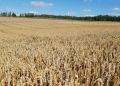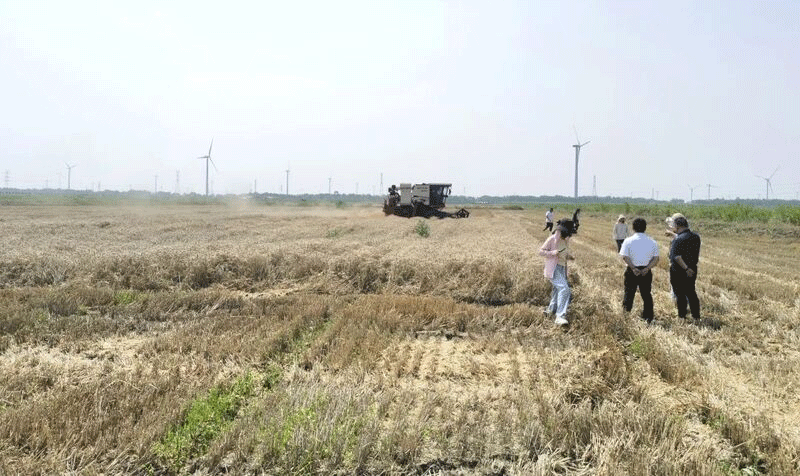
In a landmark achievement for saline soil agriculture, Jiangsu Province reported an average wheat yield of 467 kg per mu (approximately 7 metric tons per hectare) in its coastal saline-alkali farmlands. This result, verified by expert teams under the Ministry of Agriculture and Rural Affairs’ protocols, marks a 26.5% increase compared to the control area’s yield of 369.1 kg per mu. Notably, this was accomplished despite adverse spring drought conditions in 2025, highlighting the resilience of the applied techniques.
Soil Health and Biodiversity Improvements
Key soil metrics showed significant progress:
- Salt content, pH, and bulk density decreased steadily.
- Organic matter, total nitrogen, and available phosphorus rose substantially.
- Biodiversity improved, with greater species richness and ecosystem stability in the coastal environment.
These gains confirm that long-term soil remediation strategies are effectively reversing degradation in historically unproductive lands.
Integrated Techniques Behind the Success
The project, located in Rudong County’s Jueju reclamation zone, combined multiple innovations:
- Soil conditioning: Deep tillage, straw incorporation, organic fertilizers, and tailored nutrient blends.
- Salt-tolerant wheat varieties: Selected for adaptability.
- Smart water-salt management: Automated irrigation/drainage systems with real-time monitoring.
- Digital oversight: Soil sensors and water-quality stations enabled precision adjustments.
This “Five-Good” system (land, seeds, techniques, machinery, and management) demonstrates how technology can transform marginal soils into productive assets.
Global Context and Future Potential
Globally, over 1 billion hectares are affected by salt-affected soils (FAO, 2025), costing an estimated $27 billion annually in lost crop yields. Jiangsu’s model aligns with the UN’s Sustainable Development Goal 2 (Zero Hunger) by proving that degraded lands can be revitalized. Similar projects in Egypt, Australia, and the Netherlands have reported yield boosts of 15–30% using comparable approaches (Nature Sustainability, 2024).
Jiangsu’s breakthrough underscores the potential of integrated soil-health management and digital agriculture to secure food production in challenging environments. For farmers and agronomists worldwide, this case offers a replicable blueprint for turning saline soils into profitable, sustainable farmland.
Error