
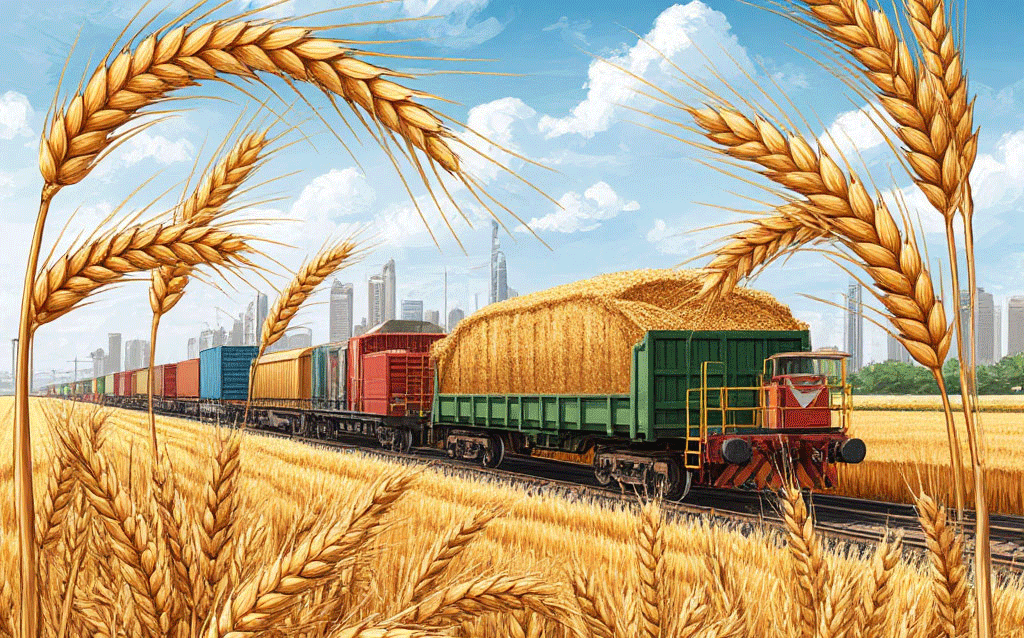
Under the supervision of Rosselkhoznadzor (Russia’s Federal Service for Veterinary and Phytosanitary Surveillance), the Kaliningrad region achieved a historic milestone by exporting 5,200 metric tons of food-grade wheat across 74 shipments to the United Arab Emirates (UAE) on July 22–23, 2025. This marks the first time wheat from this Russian exclave has entered the UAE market, signaling expanded trade opportunities for Russian grain producers.
Phytosanitary Compliance and Market Trust
The success of this shipment hinged on strict adherence to international phytosanitary standards. Rosselkhoznadzor confirmed that all 74 batches underwent rigorous laboratory testing and met the UAE’s import requirements, resulting in the issuance of 74 phytosanitary certificates. This underscores Russia’s capability to meet high-quality demands in competitive markets, particularly in the Middle East, where food security remains a priority.
Global Wheat Trade Context
The UAE, which imports 90% of its food, has been diversifying its grain suppliers to ensure stable supply chains. Russia, already the world’s top wheat exporter (projected 53 million tons in 2025, per USDA), is capitalizing on this demand. Meanwhile, Kaliningrad’s strategic Baltic Sea location offers logistical advantages for exports to Africa and the Middle East, regions where wheat consumption is growing at 2-3% annually (FAO, 2025).
Opportunities for Farmers and Agribusinesses
This breakthrough highlights:
- New export corridors for Russian wheat, reducing reliance on traditional markets.
- Growing demand for phytosanitary-certified grains, urging farmers to adopt stricter quality controls.
- Potential for higher profit margins in niche markets like the UAE, where premium-grade wheat commands competitive prices.
Kaliningrad’s inaugural wheat shipment to the UAE is more than a trade milestone—it’s a testament to the evolving dynamics of global agriculture. For farmers, agronomists, and exporters, this signals a shift toward diversified markets, stricter quality compliance, and strategic logistics. As climate change and geopolitical factors reshape trade flows, such innovations will be key to sustaining profitability and food security worldwide.
Error