

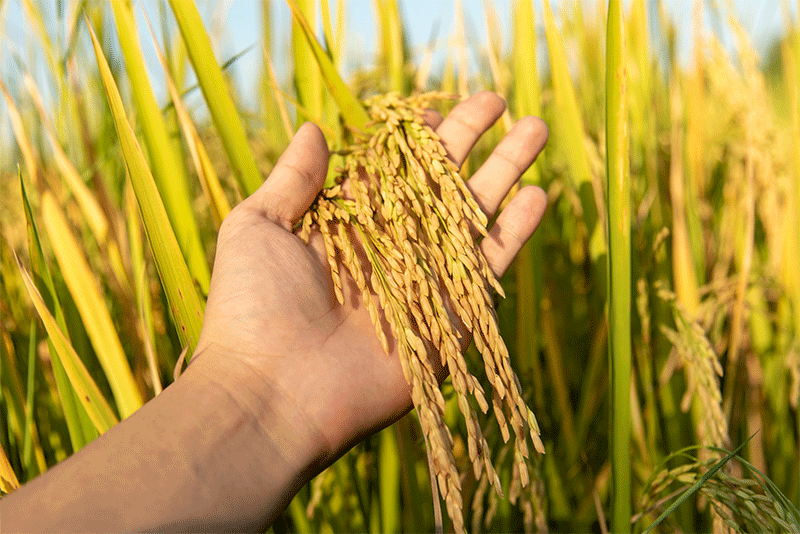
Farmers and agronomists grappling with climate-induced droughts and erratic weather now have a promising solution. Researchers at Kazan State Agrarian University (KazSAU) have patented a novel biostimulant therapy for winter wheat, significantly improving stress resilience during the critical heading phase—when the flag leaf, essential for photosynthesis and grain filling, develops.
How It Works
The treatment involves foliar spraying with two specially formulated biostimulant blends:
- Amino acid-protein complex: Contains betaines (osmoprotectants that mitigate water stress), vitamins, and proteins.
- Mineral-organic mix: Enriched with boron, phosphorus, sulfur, potassium, calcium, and manganese for enhanced nutrient uptake.
Field trials (2021–2023) on gray forest soils in Tatarstan tested three popular varieties (Marathon, Scepter, and Fotinya). The most effective application combined both biostimulants at 1 L/ha, diluted in 250 L water/ha. Results were striking:
- Yield increase: Marathon wheat saw a jump from 7.03 to 8.01 t/ha.
- Grain quality: Gluten content rose by 1.6–4.2%, elevating grain to Class 3 without yield loss.
Economic and Practical Benefits
- Cost-effective: At ~15,000 RUB/ton, the extra 1 t/ha boosts profit margins.
- No specialized equipment: Standard sprayers suffice.
- Climate-ready: Vital as droughts intensify globally. A 2023 FAO report notes that wheat yields could drop 5–15% by 2030 due to climate stressors, making such innovations critical.
Future Applications
The team plans to adapt this technology for other cereals and regions, addressing broader agricultural challenges under climate change.
KazSAU’s biostimulant therapy offers a scalable, low-cost tool to enhance wheat resilience and profitability in drought-prone areas. As extreme weather events rise, integrating such science-backed solutions will be key to sustaining global food security.
Error