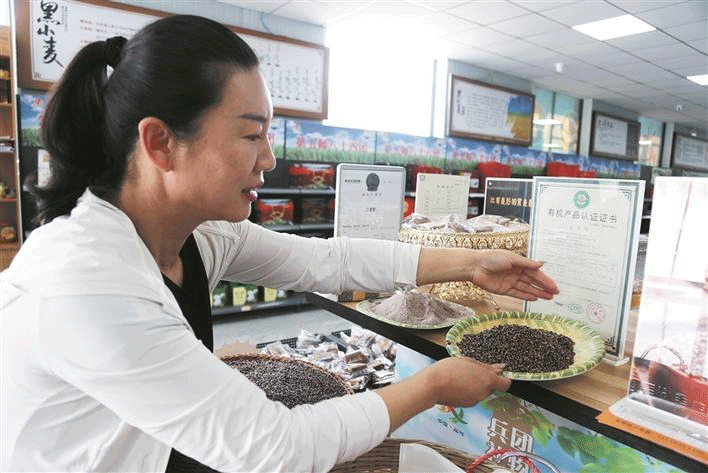
In the Boho Agricultural Industrial Park of the 86th Regiment, fields of black wheat sway in the wind, their plump ears signaling a thriving harvest. What was once an underutilized crop has now become a cornerstone of rural development in Fifth Division Shuanghe City, thanks to agro-technology and strategic market innovation.
Why Black Wheat? The Nutritional and Economic Edge
Black wheat stands out for its superior nutritional profile:
- 200% higher selenium content than conventional wheat (Zhang Yongjun, Xinjiang Shuanghe City Green Island Agricultural Technology Co.).
- Richer in protein, potassium, and calcium, making it a functional food with growing consumer demand.
- Organic certification (2023) and premium pricing—products sell for 2–3 times the price of regular wheat flour, yet remain in short supply (“Bianjiang Ai” brand).
Overcoming Challenges: Science Meets Farming
Initial hurdles in large-scale cultivation—optimal sowing density, pest control, and soil fertility—were tackled through partnerships with Shihezi University and agricultural research institutes. Key outcomes:
- Yield jumped from 300 kg/mu (2022) to nearly 500 kg/mu (2023) in the 88th Regiment’s 500-acre organic base, aided by precision irrigation and soil management.
- Breakthrough processing: Traditional methods failed due to black wheat’s unique gluten content, but collaboration with bakeries led to 40+ products, including bread, noodles, and mooncakes. A 2-ton trial batch of sugar-free black wheat mooncakes sold out in 2022, with follow-up orders doubling.
Market Expansion and Value-Added Innovation
The company’s vertically integrated model now includes:
- Stone-milled flour production lines and dedicated workshops for noodles, steamed buns, and pastries.
- E-commerce growth: Cloud warehouses in Zhengzhou (Henan) and Wuhan (Hubei) streamline nationwide logistics.
- Culinary appeal: From Shuanghe’s signature black wheat noodles to crab roe noodles in Nanjing, demand spans across China.
Future Prospects: Research and Global Potential
Ongoing R&D partnerships with Jiangnan University, Henan Academy of Agricultural Sciences, and others aim to:
- Develop hybrid strains for higher yields and climate resilience.
- Expand export channels, capitalizing on the global organic and health-food market, projected to grow at 8.2% CAGR (2023–2030, Statista).
Black wheat exemplifies how agri-tech, niche markets, and value-chain innovation can transform rural economies. For farmers and agribusinesses, it offers a blueprint: Leverage science, diversify products, and target premium markets to turn challenges into profitable opportunities.
Error