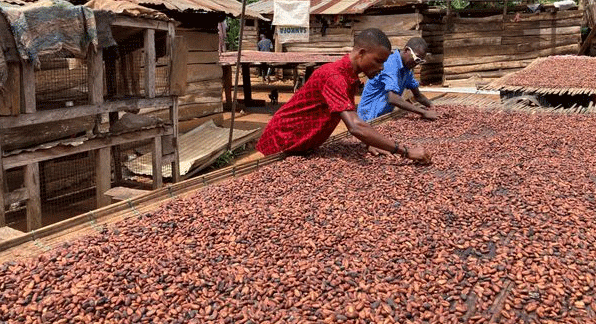
The Bitter Reality of Cocoa Farming in Ghana
In the small village of Asunafo, farmers like Dora Atiiga carefully tend to their cocoa crops, the backbone of Ghana’s agricultural economy. Ghana, together with Côte d’Ivoire, produces 60% of the world’s cocoa supply, supporting nearly one million farming families. Despite this, the farmers see little of the wealth generated by the global chocolate industry. Most own less than two hectares of land and live in poverty, earning just $2 a day on average.
Cocoa is typically cultivated in mixed farms alongside crops like plantains, oranges, and avocados, a practice that maintains biodiversity. However, the industry’s structural issues, combined with the recent surge in global cocoa prices—reaching over $6,000 per ton—have done little to improve farmers’ incomes. The Ghana Cocoa Board (Cocobod), which controls prices and supplies, recently doubled farmgate prices to $3,041 per ton, but the gap between these rates and global market values remains vast.
The Gold Rush and Its Consequences
Adding to cocoa farmers’ struggles is Ghana’s rampant illegal gold mining, known locally as “galamsey.” Triggered by soaring gold prices, galamsey has devastated communities and ecosystems. Farmers are pressured to sell fertile farmland to miners, who often leave behind polluted waterways and destroyed soils. Over 60% of Ghana’s water bodies are now contaminated with mercury and other toxins from mining operations, making agricultural recovery almost impossible.
While Ghana’s government has sought to increase revenues from legal gold mining, many concessions have gone to multinational corporations, leaving local communities with little benefit. Meanwhile, the illegal trade, fueled by corruption and organized crime, flourishes unchecked.
Climate Change and Cocoa Farming
As if economic and environmental pressures weren’t enough, climate change is wreaking havoc on Ghana’s cocoa production. Unpredictable weather patterns—droughts during rainy seasons and rain when crops need sun—have significantly reduced yields. Diseases and pests have also spread, further exacerbating losses. In 2022/23, Ghana’s cocoa harvest plummeted by 40%, causing immense financial strain on farmers.
The effects of these challenges are visible in communities like Aponoapono, where the cooperative ABOCFA (Aponoapono Biakoye Organic Cocoa Farmers Association) promotes fair trade and organic farming. These initiatives help farmers earn premiums for their crops, reinvest in schools, and develop supplementary incomes, such as producing juices from cocoa pulp. Yet, these efforts are not enough to counteract the systemic issues plaguing the industry.
Smuggling and Corruption
Frustrated by low domestic prices, many farmers resort to smuggling their cocoa to neighboring countries for better returns. In 2023 alone, Ghana lost an estimated 150,000 tons of cocoa to such practices. Farmers also express dissatisfaction with Cocobod’s lack of transparency, citing inefficiencies and mismanagement as barriers to fair compensation.
Hope Amid Challenges
Despite these adversities, farmers and cooperatives remain determined. ABOCFA and other organizations have introduced measures to combat the gold rush and preserve farmland for cocoa production. They also advocate for international support to address systemic inequalities and climate resilience. Stephen Ashia, leader of ABOCFA, emphasizes that success requires collaboration among all stakeholders—from governments to international buyers and NGOs.
The plight of Ghana’s cocoa farmers reflects a broader struggle to balance economic opportunity, environmental preservation, and social equity. While the gold rush offers quick financial gains for a few, it undermines the agricultural foundation upon which millions depend. Addressing this crisis requires transparent governance, fair trade practices, and sustainable land management. Without swift action, the “curse of gold” may overshadow the sweet promise of cocoa.
Error