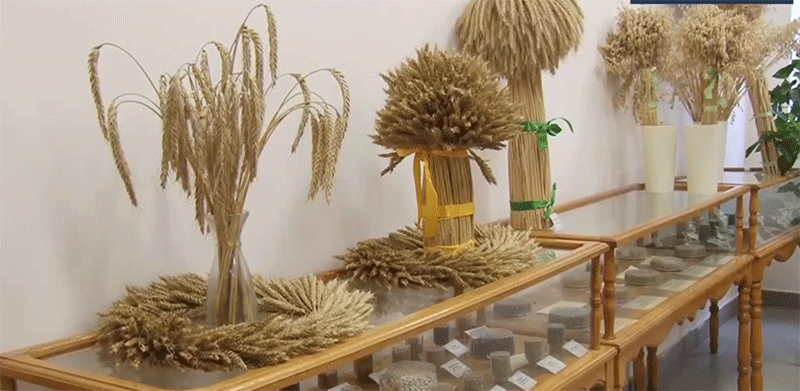
At the North Caucasus Research Institute of Mountain and Foothill Agriculture, science meets meticulous, hands-on craftsmanship. Researchers engage in the labor-intensive process of hand-selecting individual seeds, separating the small, diseased, or damaged grains to ensure genetic purity for breeding. This foundational work supports the institute’s three core, forward-looking missions: advanced seed breeding, establishing a robust domestic deep-processing industry for grains, and creating sustainable animal feed systems.
The institute’s bread and butter is developing locally-adapted varieties of cereals and forage crops. A standout focus is on triticale, a hardy hybrid of wheat and rye noted for its exceptional storm resistance. All new varieties undergo rigorous state commission testing. In a strategic move to address regional aridity, the institute collaborates with Iraqi scientists, exchanging drought-resistant breeding materials. Once a new variety is patented, the institute initiates primary seed production, generating “super-elite” original seeds before scaling up through a meticulous four-year propagation scheme across different climatic zones, from Rostov to Crimea.
Perhaps the most ambitious vision lies beyond the field. The institute is advocating for the deep processing of soft wheat varieties into high-value products like specialty starches, glucose syrups, biogas, amino acids, and feed supplements—products Russia currently imports due to a lack of domestic processing plants. This represents a significant, unoccupied niche in the national agro-industrial complex. Concurrently, the institute’s zootechnical research focuses on developing optimized animal feed rations that increase meat or milk yield while reducing overall feed volume. This work is part of a broader commitment to “biologization”—eschewing chemical fertilizers in ecologically sensitive mountain zones in favor of sustainable practices.
The work in North Ossetia is a microcosm of the strategic priorities needed for modern, resilient agriculture. It demonstrates that progress hinges on a triad of factors: genetic sovereignty through local breeding adapted to specific climates and challenges; economic sophistication by capturing more value from raw commodities through processing; and ecological responsibility via sustainable practices. While the institute highlights very real needs for better equipment and young scientific talent, its blueprint—combining traditional breeding care with a vision for high-tech bio-refining and sustainable husbandry—offers a compelling model for regional agricultural development that balances productivity, profitability, and environmental stewardship.
Error