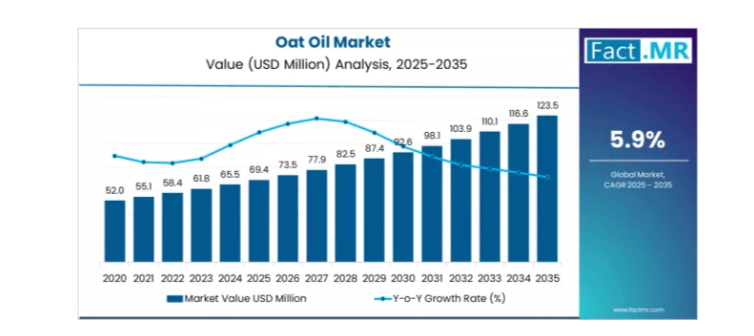
For generations, the value of an oat crop has been calculated in bushels per acre for grain, feed, and food. However, a significant shift is underway. The latest market analysis projects that the global oat oil market will grow from USD 69.4 million in 2025 to USD 123.5 million by 2035, expanding at a robust Compound Annual Growth Rate (CAGR) of 5.9%. This isn’t just incremental growth; it represents a 78% total increase in market value, meaning the market size will grow by nearly 1.8 times over the decade. For farmers, agronomists, and processors, this signals a pivotal opportunity to redefine the economic potential of every hectare of oats planted.
The Engine of Growth: Why Personal Care is Driving Demand
The primary force behind this surge is not in the food aisle, but on the beauty shelf. The Personal Care & Cosmetics sector is the dominant end-user, accounting for 58.7% of the entire market. This is a direct result of a global consumer pivot towards plant-based, “clean-label” ingredients. Oat oil, particularly colloidal oat oil, is rich in lipids, antioxidants, and ceramides. It is highly effective for skin barrier repair and moisturization, making it a star ingredient in products for sensitive and eczema-prone skin.
This trend is part of a larger movement. According to a 2024 report by Grand View Research, the global organic personal care market itself is expected to grow at a CAGR of 9.4% from 2024 to 2030, creating a powerful tailwind for natural ingredients like oat oil. The demand is global, with Asia Pacific, Europe, and North America identified as the key growth regions, reflecting worldwide consumer convergence on health and wellness.
From Field to Formulation: The Supply Chain Evolution
This new demand is reshaping the oat value chain. Key players like Oat Cosmetics, Fazer Mills, and Givaudan are scaling up their capabilities to meet the exacting standards of the cosmetic industry. The forecast period is broken down into two phases:
- 2025-2030: The initial growth phase (+USD 24.5 million) will be driven by establishing supply chains and proving efficacy in cosmetic formulations. For agricultural producers, this means a growing need for oat varieties and processing contracts geared toward oil extraction, not just grain yield.
- 2030-2035: The second phase (+USD 29.6 million) will be characterized by premiumization and technological advancement. The industry will demand ultra-high purity oat oil systems, driven by organic certification and advanced extraction technologies like supercritical CO2 extraction. This places a premium on consistent quality and traceability from the field.
For farmers and agricultural engineers, this implies that future success will hinge not only on yield but also on specific quality parameters—such as oil content and fatty acid profile—and the ability to partner with processors who can meet these stringent, high-value market requirements.
The projected growth of the oat oil market represents a paradigm shift. It moves oats from a commodity grain to a source of a specialized, high-margin botanical extract. For the entire agricultural sector—from the breeder developing new varieties to the farm owner considering contract opportunities and the processor investing in new technology—this is a clear call to action. The future of oat profitability lies in diversifying its end-uses. By understanding and engaging with the sophisticated supply chains of the personal care industry, the agricultural community can capture a significant share of this USD 54.1 million opportunity and unlock new, sustainable revenue streams.
Error