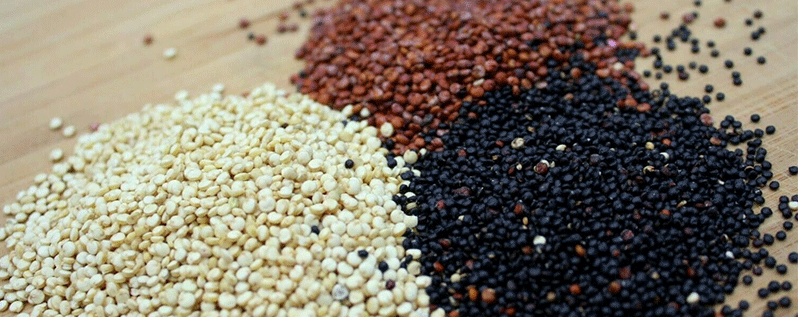
While often spotlighted in wellness media for its anti-aging and dietary benefits, quinoa (Chenopodium quinoa) deserves serious attention from the agricultural community for its potential as a high-value, resilient crop. This pseudocereal, hailed as a “superfood queen,” is rapidly shifting from a niche health food to a mainstream staple, creating new market opportunities. For farmers, agronomists, and food scientists, understanding quinoa’s nutritional power, market trajectory, and production requirements is key to evaluating its role in future agricultural systems.
The Nutritional Data: A Powerhouse for Human Health
The health claims surrounding quinoa are backed by a formidable nutritional composition. Unlike traditional cereals like rice and potatoes, quinoa is a complete protein, containing all nine essential amino acids crucial for human health. With approximately 4 grams of protein per 100-gram serving, it offers a superior protein content for plant-based diets. Its carbohydrate profile is dominated by complex, “slow-burning” carbs (21g per 100g) and dietary fiber, which contribute to stable blood sugar levels and prolonged satiety.
Furthermore, quinoa is naturally gluten-free, aligning with the growing consumer demand for gluten-free products, a market projected to exceed $11.5 billion globally by 2029 according to Mordor Intelligence. It is also rich in minerals like iron, magnesium, and zinc, and contains a good balance of vitamins. This dense nutrient profile is the driver behind its health-associated popularity, including claims of improved metabolism and cholesterol management.
Market Trajectory: From Niche to Mainstream
The global quinoa market is experiencing significant growth. Driven by rising health consciousness, the market was valued at over $1.2 billion in 2024 and is expected to grow at a compound annual growth rate (CAGR) of more than 10% over the next five years. This surge is not limited to North America and Europe; demand is rising in Asia and the Middle East, presenting a substantial export opportunity for producing countries.
Originally cultivated in the Andean region of South America, quinoa production is now expanding globally. Successful trials and commercial farms have been established in over 70 countries, including the U.S., Canada, India, and parts of Europe and Africa, demonstrating its remarkable adaptability to diverse agro-climatic conditions, including saline soils and drought-prone regions.
Agronomic Considerations and Challenges for Production
For farmers considering diversification, quinoa offers several advantages. It is a hardy plant known for its tolerance to drought, frost, and poor soils. However, successful cultivation requires specific knowledge:
- Varietal Selection: Choosing varieties adapted to local day length and climate is critical.
- Processing: The seeds are coated with saponins, bitter-tasting compounds that must be washed off after harvest, requiring specific post-harvest infrastructure.
- Pest and Disease Management: As a relatively new crop in many regions, established integrated pest management (IPM) strategies are still evolving.
A Strategic Crop for a Health-Conscious Future
Quinoa is far more than a passing dietary fad. It represents a tangible opportunity for agricultural diversification and value-added production. Its exceptional nutritional profile aligns perfectly with global food trends, ensuring strong and growing market demand. For the agricultural sector, the challenge and opportunity lie in agronomic research and development—breeding adapted varieties, refining sustainable cultivation practices, and developing efficient processing chains. Farmers who pioneer quinoa production are positioning themselves at the forefront of a lucrative and expanding market, contributing to a more nutritious and resilient global food system.
Error