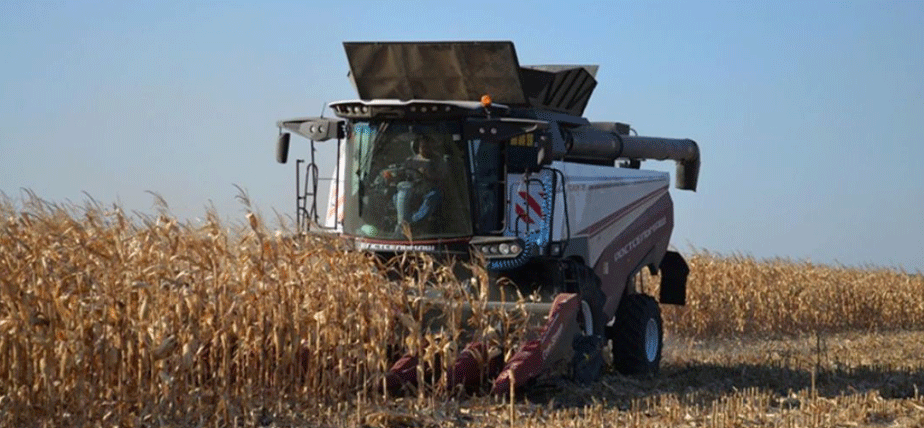
The agricultural season in Penza Oblast has reached a significant milestone with the start of the corn-for-grain harvest. According to regional reports, farms in the Penzensky and Serdobsky districts have already threshed over 1,100 tonnes of grain corn, achieving an average yield of 50 centners per hectare (approximately 5 metric tons/ha). The harvest is timed for optimal quality, taking place at the stage of full maturity when the kernels become hard and vitreous and their attachment to the cob darkens.
The regional Ministry of Agriculture emphasizes that corn remains a cornerstone of the agro-industrial complex due to its remarkable versatility. The grain is a vital raw material for producing a wide range of products, including flour, cereals, oil, starch, and, crucially, animal feed. Beyond food and feed, corn is increasingly important for industrial applications, such as the manufacturing of alcohol, biofuels, adhesives, paints, and even eco-friendly disposable tableware.
The reported yield of 5 t/ha provides a snapshot of local performance. This figure can be contextualized with global data; for instance, the USDA’s 2024 projections for corn yields in major producing regions like the United States often exceed 11 tonnes per hectare, highlighting the significant potential for yield gap closure through improved genetics and agronomic practices. Furthermore, the demand for corn in industrial sectors is growing. A 2024 analysis by the International Grain Council points to the sustained expansion of the bioethanol industry as a key driver of global corn consumption, reinforcing its strategic importance.
The initiation of the corn harvest in Penza is a reminder of the crop’s dual role in ensuring both food security and industrial development. For farmers and agronomists, achieving a strong yield is just the first step; understanding the diverse and expanding market opportunities for corn is essential for maximizing profitability. For agricultural engineers and scientists, the focus should remain on innovating to improve harvest efficiency, post-harvest handling, and developing value-added processing pathways to fully capitalize on this versatile commodity.
Error