
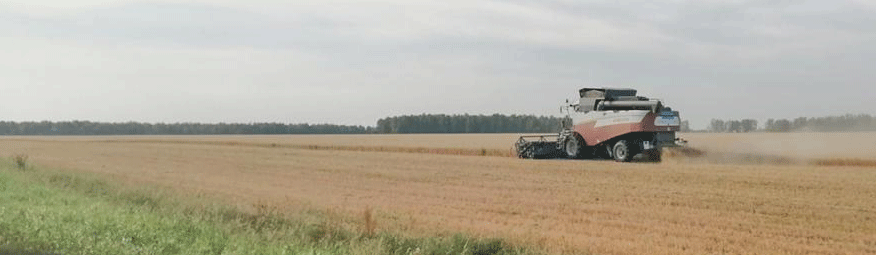
While many regions grapple with stagnation, Kurgan Oblast is scripting a remarkable story of agricultural transformation. Governor Vadim Shumkov recently announced that the region has already surpassed a 2 million ton harvest of grain and legumes, with a new target of 2.5 million tons of oilseeds now in sight. This impressive grain harvest is just one facet of a broader, strategic expansion. Backed by data from the regional government, Kurgan’s agri-growth is systemic: over the past six years, the region has seen its beef cattle herd triple, its sheep flock grow 2.8 times, and its exports of agricultural and food products surge by 180% since 2019. This multi-pronged advancement, which earned the region the top spot in Russia for agri-industrial growth rates in 2022, offers a blueprint for integrated rural economic development.
Deconstructing the Growth Engine: Crops, Livestock, and Value Addition
The success in Kurgan is not accidental; it is the result of concurrent investments across the entire agricultural value chain. The massive grain harvest provides the foundational security for its livestock boom. The tripling of the beef cattle herd is particularly significant, aligning with a national Russian strategy to increase domestic meat production and reduce import reliance. This growth in animal husbandry is not limited to one species; swine numbers have also increased by 40%, demonstrating a diversified approach to protein production. This synergistic model, where locally grown feed supports local livestock, creates a resilient and cost-effective production system.
Perhaps the most telling indicator of a mature agricultural economy is the growth of its processing sector. Kurgan has moved beyond raw commodity production into value-added manufacturing. A 200% increase in vegetable oil production and a 50% rise in flour and canned meat output indicate that the region is capturing more economic benefit from every hectare of farmland and every head of livestock. This focus on processing not only creates jobs but also insulates farmers from the volatility of global commodity markets. The resultant 2.8-fold increase in agro-industrial exports confirms that Kurgan is now producing goods that meet the quality and price demands of the international market, transforming the region from a net consumer into a net exporter of food.
The agricultural renaissance underway in Kurgan Oblast is a powerful case study in strategic, multi-sectoral development. It demonstrates that sustainable growth is not achieved by focusing on a single commodity but by fostering a virtuous cycle where crop production, livestock breeding, and food processing reinforce one another. For farmers, agronomists, and policymakers, Kurgan’s model highlights the immense potential that lies in breaking down silos between agricultural sub-sectors. By investing in the entire chain—from seed and soil to the final packaged product—regions can build more resilient, profitable, and self-sustaining agricultural economies that are capable of competing on both domestic and global stages.
Error