

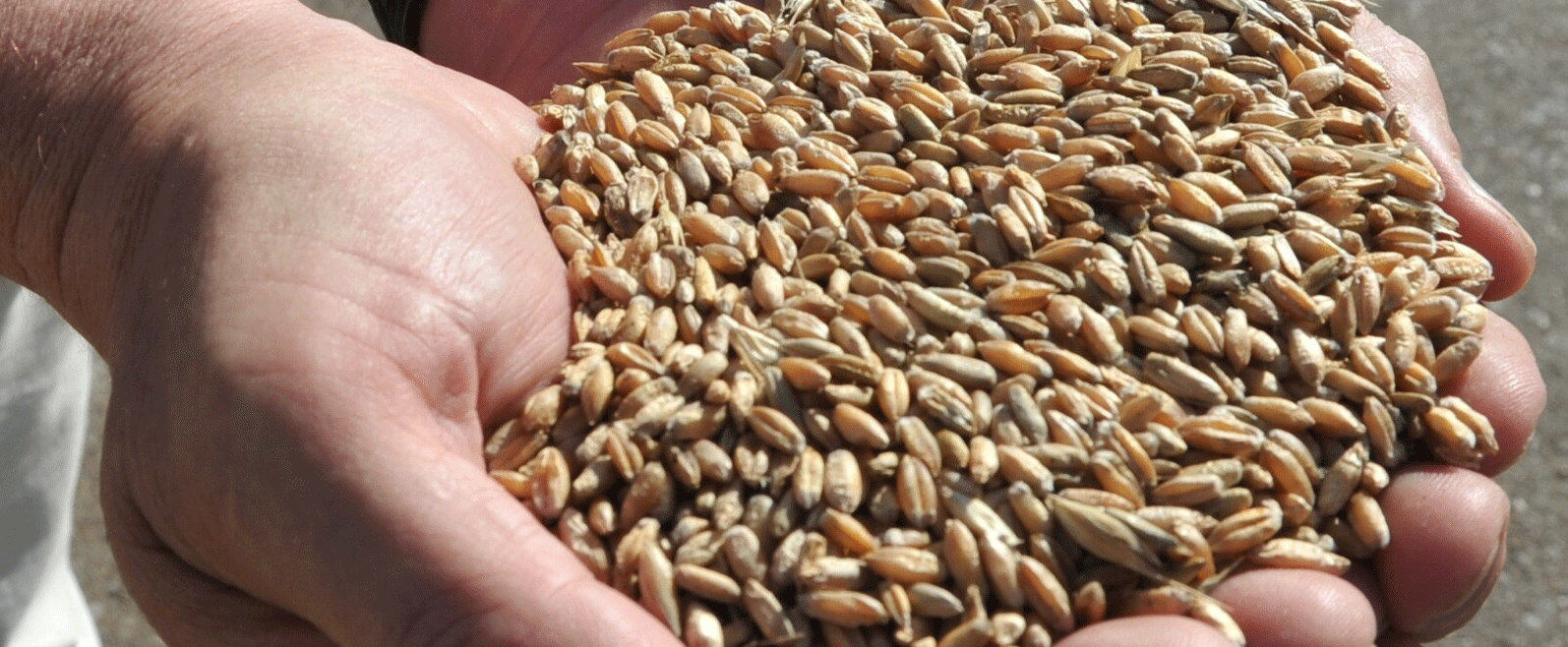
The 2025 harvest campaign in the Republic of Bashkortostan is progressing at a strong pace, with favorable weather allowing farmers to make significant strides. According to the regional Ministry of Agriculture, the current harvest figures are impressive: a total of 3.112 million tonnes of grain has been threshed from 1.11 million hectares, representing 79% of the total sown area. The average yield across the republic stands at 28 centners per hectare (2.8 t/ha).
Delving deeper into the data reveals standout performances at the district level. Grain and legume harvests have exceeded 100,000 tonnes in twelve districts. The Sterlitamaksky District leads in total volume, having gathered over 190,000 tonnes. Meanwhile, the Karmaskalinsky District has achieved the highest productivity, with yields nearing 42 centners per hectare (4.2 t/ha), significantly above the regional average.
Contextualizing the Yield Data
The average yield of 2.8 t/ha provides a solid baseline for the Volga-Ural region. However, the disparity between the average and the top-performing districts (4.2 t/ha) highlights a significant “yield gap” within Bashkortostan itself. This gap represents a substantial opportunity. According to a 2024 global yield analysis by the UN’s Food and Agriculture Organization (FAO), closing yield gaps through improved agronomic practices is a primary lever for increasing food production without expanding agricultural land. The performance in Karmaskalinsky District suggests that local factors—such as soil management, variety selection, and precision farming techniques—are key drivers. A 2023 study in the European Journal of Agronomy found that integrated soil fertility management could increase cereal yields in similar climates by 20-30%, aligning with the potential uplift seen in Bashkortostan’s leading districts.
The successful harvest in Bashkortostan is a testament to the region’s agricultural capacity. The overall volume of over 3 million tonnes is a significant contribution to national food security. For farmers, agronomists, and scientists, the most valuable insight lies in the internal yield variation. The high productivity achieved in districts like Karmaskalinsky serves as a powerful case study, demonstrating that the potential for higher yields exists within the region’s current framework. The focus for the future should be on identifying and disseminating the specific best practices—from soil health to advanced genetics—that have enabled these top-performing districts to excel, thereby raising the productivity floor for the entire republic.
Error