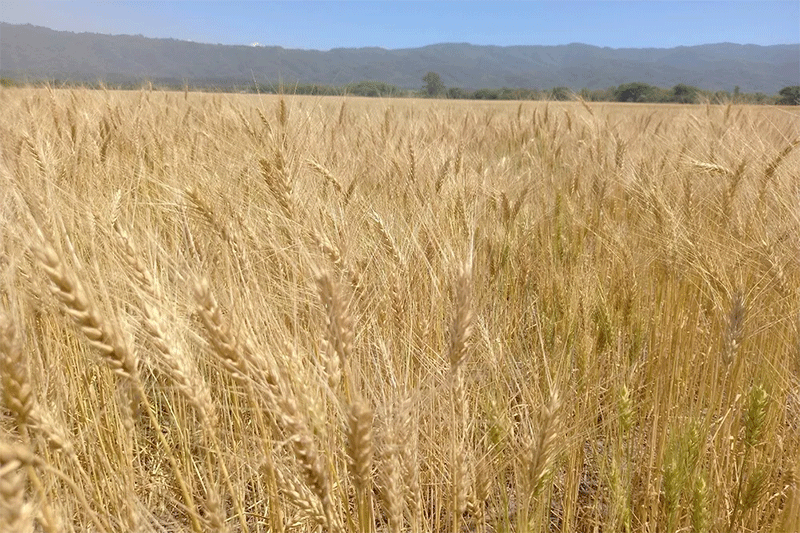
Argentina’s agricultural sector is poised for a historic achievement. According to the Rosario Grains Exchange’s October estimate, the nation’s wheat production is projected to reach 23 million tonnes, a figure that would match the record set in the 2021-22 season. This optimistic forecast is rooted in one primary factor: unprecedented soil moisture. The exchange reported that a substantial 6.7 million hectares were planted to wheat, with industry leaders marveling, “We’ve never seen wheat like this.”
The source of this moisture was a series of extreme rainfall events. The report highlighted that in regions like Gancedo, Chaco, August rainfall exceeded 115 years of historical monthly records. This deluge has left the soil profile exceptionally charged, creating an ideal foundation for crop establishment and early growth. The national average yield is estimated at a robust 3.4 tonnes per hectare (approximately 131 bushels per hectare), reflecting this excellent start.
The Flip Side of the Coin: Waterlogging and Climatic Threats
However, this bounty of water is a double-edged sword. The same rains that provided ideal moisture have also caused significant damage through waterlogging. The exchange reported that excess water reduced the total planted wheat area by 403,000 hectares, with the province of Buenos Aires alone losing 210,000 hectares. In the most affected areas, annual rainfall has accumulated between 1,100 and 1,500 mm, nearly double the average for the period.
Beyond the initial planting losses, the crop now faces critical late-season risks. The report explicitly warns of threats from “late frost or pulses of very hot air that can blow it away during filling.” This period of grain filling is the most sensitive, where a few days of extreme heat (a phenomenon increasingly linked to climate change) can drastically reduce final yield and quality, undermining the current record potential.
The Broader Crop Picture: Corn and Soybeans in the Mix
This hydrological reality is also shaping the prospects for Argentina’s other major crops. The report indicates that early corn planting proceeded on schedule despite the rains, with 28% of the total area planted in September. Corn is on track for a record production of 61 million tonnes from 9.7 million hectares.
For soybeans, the picture is more conservative. Planting has begun with an estimated area of 16.4 million hectares, representing a 7% decrease year-over-year. With an assumption of normal weather conditions going forward, production is estimated at 47 million tonnes. This area reduction may partly reflect farmer caution in the face of saturated soils and the memory of recent drought.
Navigating the New Normal of Climate Volatility
Argentina’s projected record wheat harvest is a testament to the resilience of its farmers and the productive capacity of its land. However, it also serves as a stark case study in modern agricultural challenges, where a single input—water—can be both the key to abundance and the source of devastating loss.
For the global agricultural community, the situation in Argentina underscores several critical lessons:
- Climate Volatility is the New Baseline: Extreme weather events, both droughts and floods, are no longer anomalies but central factors in production planning.
- Risk Management is Paramount: Success depends on managing the entire season’s risks, from planting delays due to waterlogging to terminal heat stress during grain fill.
- The Entire System is Interconnected: Hydrological extremes impact not just one crop but force adjustments across the entire cropping system, as seen with the shifting soybean area.
Ultimately, this potential record is a fragile victory. It highlights the urgent need for continued investment in climate-resilient crop varieties, advanced weather forecasting, and adaptive agronomic strategies to secure food production in an increasingly unpredictable world.
Error