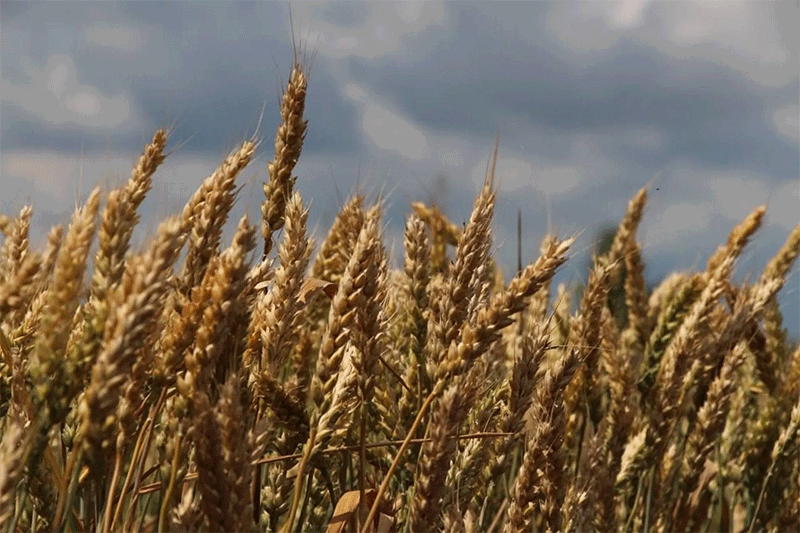
Agricultural producers in Russia’s Altai Krai have passed a significant harvest milestone, threshing over 1 million tonnes of grain despite challenging weather conditions that have complicated harvesting operations across the region. According to regional reports, this substantial yield represents completion of only 15% of the total planted area, indicating potentially strong overall production figures once harvesting concludes. The achievement is particularly notable given the precipitation patterns affecting parts of the krai, forcing some districts to deliberately slow their harvest pace to preserve grain quality.
Regional harvest progress varies significantly based on weather conditions and local infrastructure. Smolensky District leads with 45% completion, followed by Zalesovsky District at 40%, and Kosikhinsky, Zmeinogorsky, Baeysky, Altaysky, and Rodinsky districts all reporting just over 25% completion. Meanwhile, several districts including Tselinny, Togulsky, Rebrikhinsky, Ust-Kalmansky, Zonalny, Biysky, Charyshsky, Troitsky, and Barnaul are experiencing deliberate harvest delays due to persistent rainfall that could compromise grain quality if harvested under overly moist conditions.
Simultaneously, fodder preparation is progressing at a steady pace, with regional governor Viktor Tomenko reporting that 66% of the planned volume has already been secured. This parallel activity demonstrates the multifaceted nature of agricultural operations during the critical harvest period, where both grain harvesting and winter feed preparation must be coordinated efficiently.
The harvest dynamics in Altai Krai reflect broader patterns across Russia’s agricultural heartlands. According to recent USDA reports, Russia’s total grain harvest for 2024 is projected to reach approximately 140 million tonnes, with wheat accounting for roughly 90 million tonnes. The progress in Altai—a region that typically contributes significantly to Russia’s agricultural output—suggests these national projections remain achievable despite regional weather challenges. The Russian Ministry of Agriculture has noted that precipitation patterns during the 2024 harvest season have been 15-20% above average in several key growing regions, requiring adaptive harvest strategies.
The Altai harvest update demonstrates both the resilience and challenges of modern grain production. Achieving 1 million tonnes from just 15% of planted area indicates strong yield potential, while the weather-related delays highlight the ongoing vulnerability of agriculture to climatic conditions. The varying progress between districts underscores the importance of localized agricultural strategies and flexible harvesting approaches. As climate patterns become increasingly variable, the ability to adapt harvest operations to changing conditions will become ever more critical for maintaining both quantity and quality of grain production. The simultaneous progress in fodder preparation further illustrates the sophisticated logistical planning required in contemporary agricultural management.
Error