• About
  • Advertise
  • Careers
  • Contact
Friday, December 5, 2025
  • Login
No Result
View All Result
Field Crops news
  • Home
  • News
  • AgroTech & Innovation
  • Science
  • Sustainability
  • Market News
  • Research & Development
  • Home
  • News
  • AgroTech & Innovation
  • Science
  • Sustainability
  • Market News
  • Research & Development
No Result
View All Result
Field Crops news
No Result
View All Result
Home Diseases

Aflatoxins in maize production

by Maria YEROKHOVA
14 August 2024
in Diseases
0
Enhancing maize growth and resilience to environmental stress with biochar, gibberellic acid and rhizobacteria
0
SHARES
3
VIEWS
Share on FacebookShare on Twitter

The presence of mycotoxins in crops is a matter of great concern due to the significant effects of chronic and acute toxicity due to exposure through food and feed. Aflatoxins (AFs) are the most toxic mycotoxins occurring in host crops infected with Aspergillus from section Flavi . The four primary molecules synthesized by toxigenic fungi from this section are aflatoxins B1, B2 (AFBs), G1 and G2 (AFGs). They can also be metabolized to produce derivatives, such as aflatoxin M1 (AFM1), which may be produced in lactating individuals consuming diets contaminated with aflatoxin B1 .

AFs, and more specifically aflatoxin B1 (AFB1) and its derivative AFM1, are considered the most harmful known mycotoxins. AFB1 is a potent natural carcinogen that can cause hepatocarcinoma in humans and is considered by the International Agency for Research on Cancer (IARC) to be a group I carcinogen for both humans and animals. This toxin is also immunosuppressive and has been associated with growth impairment in children. AFB1 is the major historical contaminant of crops in tropical and subtropical regions, in which hydrothermal conditions favour both fungal development and toxin production.

AF contamination was not considered a significant threat to agricultural production in Europe, due the less favourable climate, and attention was therefore focused on products imported from other countries. Like many countries worldwide, the EU has imposed regulations on the levels of AFs permissible in food, based on the health risk associated with AF exposure . The maximum permissible content in unprocessed maize destined for human consumption is 2 μg/kg for AFB1 and 4 μg/kg for AFB1, B2, G1 plus G2. Commission Directive 2002/32/EC on undesirable substances in animal feed established maximum contents in feed materials ranging from 5 to 50 μg/kg depending on the material and the animal considered.

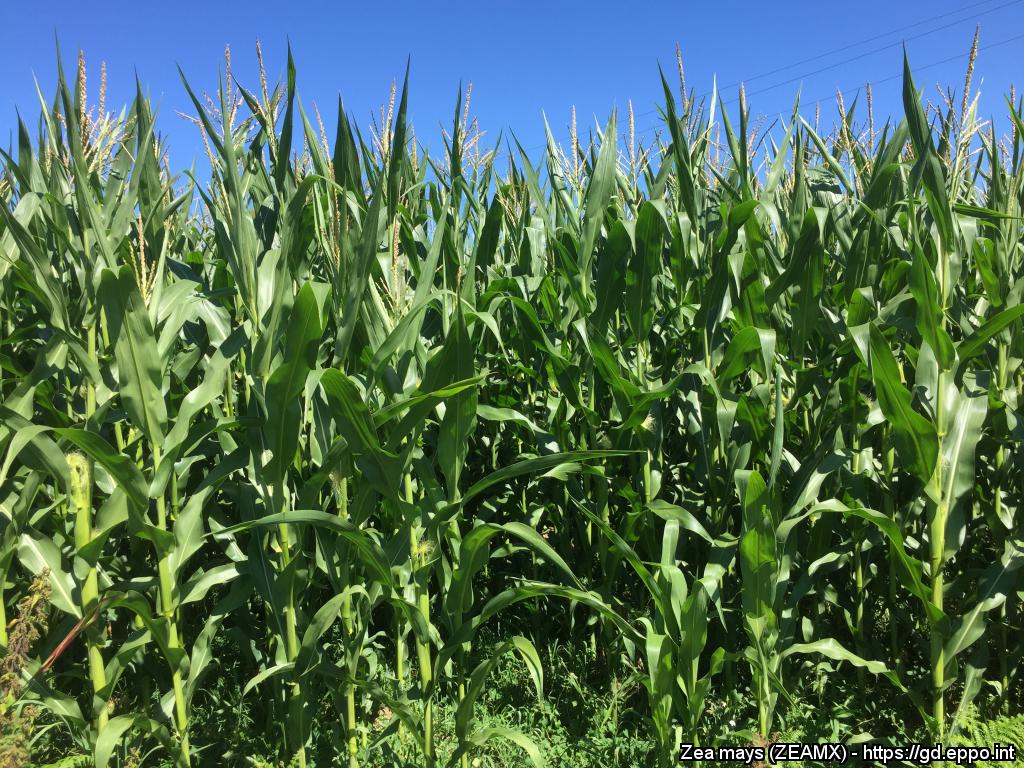
Photo: EPPO (2024) EPPO Global Database. https://gd.eppo.int

Reference: Leharanger, A., Paumier, D., Orlando, B., Bailly, S. & Valade, R. (2024) Two new qPCR assays for detecting and quantifying the Aspergillus flavus and Aspergillus parasiticus clades in maize kernels. Plant Pathology, 00, 1–10. Available from: https://doi.org/10.1111/ppa.13982

Error

Tags: AflatoxinsAspergillus flavusfood safety

Maria YEROKHOVA

Next Post
New Wheat Variety from Chelyabinsk: A Breakthrough for Russian Agriculture

New Wheat Variety from Chelyabinsk: A Breakthrough for Russian Agriculture

Newsletter

Global Wheat Crisis Looms as Weather Woes Diminish Crop Yields

Global Wheat Crisis Looms as Weather Woes Diminish Crop Yields

12 November 2024

Black Wheat: The Rising Star of Sustainable Agriculture and Rural Prosperity

15 July 2025

Russian Legume Production Set to Increase in 2024 Despite Challenging Weather Conditions

22 October 2024

Kazakhstan’s Grain Industry Faces Crisis as Rail Tariffs Set to Triple by 2026

16 August 2025

Illinois Farmers Face Uncertainty as U.S.-Mexico Trade Tensions Escalate​

6 March 2025

Russia Dominates Africa’s Wheat Market: Trends, Challenges, and Future Opportunities

12 June 2025

Sicilian Organic Carrots Turnover Increases by 25 Percent

3 July 2024

Hebei’s Comprehensive Measures to Safeguard Winter Wheat Growth

21 March 2025

Farming with AI: How One App Is Revolutionizing Wheat Production in North China

11 April 2025

Drones and Genetics: Revolutionizing Drought-Resistant Wheat for a Changing Climate

1 June 2025
  • About
  • Advertise
  • Careers
  • Contact
Call us: +51 93 999 5140

© 2020-2024 Field Crops news

Welcome Back!

Login to your account below

Forgotten Password?

Retrieve your password

Please enter your username or email address to reset your password.

Log In
No Result
View All Result
  • Home
  • News
  • Science
  • Sustainability
  • AgroTech & Innovation
  • Market News
  • Science
  • Research & Development
  • About
  • Contact

© 2020-2024 Field Crops news