A Strategic Purchase: What a National Wheat Reserve Buy Means for Market Stability and Farmer Support
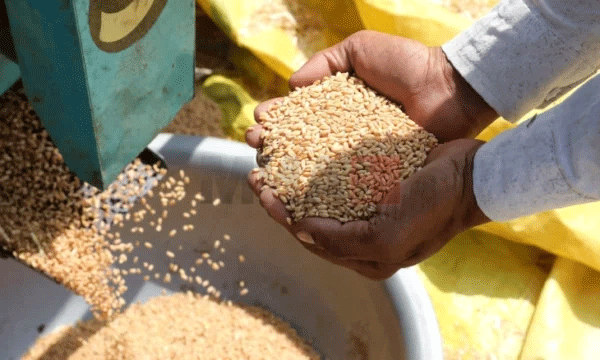
In a notable shift for agricultural policy in the Balkans, North Macedonia’s Minister of Agriculture, Forestry, and Water Economy, Cvetan Tripunovski, has announced a landmark decision: the state will purchase 2,025 tonnes of domestically produced wheat for the national reserve. This marks the first time the country has specifically sourced Macedonian wheat for its strategic stockpiles, representing a direct intervention aimed at supporting local farmers and strengthening national food security.
The official announcement, made via the minister’s Facebook profile, specified key details of the tender. The state will acquire the wheat at a fixed price of 13 denars per kilogram (excluding VAT). For a market often subject to global price volatility, this state-guaranteed price creates an immediate and stable outlet for local production. While the volume of 2,025 tonnes is a modest start, the symbolic and economic precedent it sets is substantial. It establishes a tangible price floor, providing farmers with a measure of income security in a fluctuating market.
This move can be seen as part of a broader global trend where nations are re-evaluating their food sovereignty in the wake of supply chain disruptions. The war in Ukraine has highlighted the vulnerability of relying heavily on imported grains, prompting many countries to strengthen their local production and storage capacities. According to recent data from the Food and Agriculture Organization (FAO) of the United Nations, global wheat stocks are being closely managed, and national reserve policies are increasingly viewed as a critical tool for buffering against international market shocks and ensuring a stable domestic food supply.
Minister Tripunovski emphasized that this initiative is part of a continued effort to provide “more support for agriculture.” This state-level purchase injects capital directly into the rural economy and demonstrates a commitment to utilizing domestic capacity. For farmers, it reduces some of the market risk associated with the harvest period. For agronomists and agricultural engineers, it underscores the importance of producing quality wheat that meets the specifications for state reserves, potentially driving improvements in post-harvest handling and storage standards nationwide.
North Macedonia’s decision to purchase domestic wheat for its national reserve is a strategic and symbolic step towards greater agricultural resilience. While the initial volume is limited, the policy establishes a crucial precedent for government-backed price support and market stabilization. It signals a recognition of the importance of shoring up local food systems against global instability. For farmers and industry stakeholders, this intervention provides a concrete form of support and a clear signal that the state is acting as a partner in safeguarding the agricultural sector’s viability. The long-term success of such a program will depend on its consistency and potential for scaling, but its inaugural launch is a positive development for Macedonian agriculture.
Error