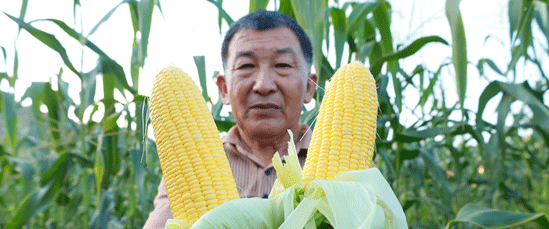
In the early morning light of Changtai District, Fujian, the harvest of “Tai Xiantian No. 2” sweet corn begins. This scene is more than a simple harvest; it is the culmination of a strategic transformation in fresh corn production. Changtai, forming one corner of Fujian’s fresh corn “Golden Triangle” alongside Jian’ou and Yong’an, has stabilized its annual planting area at nearly 50,000 acres, accounting for over 70% of Zhangzhou City’s total. This scale provides the foundation for an industry that is now leveraging science and collaboration to reach new heights.
The breakthrough is rooted in a partnership with science. At the Xihu Village demonstration base, researchers from Fujian Agricultural and Forestry University have implemented precise “scientific diet” programs for crops. Their “reduce fertilizer and increase efficiency” technology, which optimizes fertilizer type, amount, and placement, has delivered remarkable results: a 15% increase in yield coupled with a significant reduction in chemical fertilizer use. This aligns with global trends. A 2023 meta-analysis in Nature Food concluded that site-specific nutrient management can increase crop yields by 10-20% while reducing nitrogen fertilizer use by 15-30%, dramatically improving nitrogen use efficiency (NUE) and mitigating environmental impact.
Beyond agronomy, Changtai is innovating at the system level. To overcome the limitations of fragmented, village-by-village production, the district established the Xuemeiyang Ecological Agriculture Inter-Village Party Committee. This governance model pools land, labor, and technical resources, creating powerful economies of scale. The payoff is clear: this year, the corn purchase price in the consolidated area rose by over 20%. Furthermore, the adoption of a “corn-rice-corn-vegetable” rotation system ensures year-round land productivity and soil health, a practice supported by FAO studies that show crop rotation can increase total system yield by 10-25% and reduce pest and disease pressure.
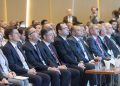
Variety innovation is constant. Alongside the high-yielding “Tai Xiantian No. 2,” growers are trialing niche varieties like the purple-hulled “Ziyu Jingang,” which commands a premium price, offering a potential income of over $8,300 USD per hectare from just these trial plots. This mirrors a broader consumer-driven shift in global markets toward diverse, high-quality, and visually distinctive produce. The industry’s commitment to this evolution was showcased at the recent “3rd Fujian Fresh Corn New Variety Exhibition Exchange,” positioning Changtai at the heart of regional dialogue on breeding, green cultivation, and integrated development.
The story of Changtai’s sweet corn is a blueprint for modern, profitable, and sustainable specialty crop production. It demonstrates that success lies not in any single factor, but in the synergistic integration of genetics (G), environment (E), and management (M)—the core of the G×E×M paradigm. By marrying advanced agronomic science with bold organizational reform and a direct connection to market trends, Changtai has moved from traditional farming to a knowledge-intensive agro-enterprise. The result is a resilient system that boosts farmer income, conserves resources, and meets sophisticated consumer demand—a model worthy of attention from anyone invested in the future of agriculture.
Error