In a clear commitment to food security and social stability, the Jordanian government has unequivocally extended its bread price freeze until the end of 2026. This decision, backed by a JD 109 million subsidy for wheat in 2026, is part of a broader strategy that includes a significant expansion of national grain storage capacity to safeguard against international supply chain disruptions.
Building a Buffer Against Global Volatility
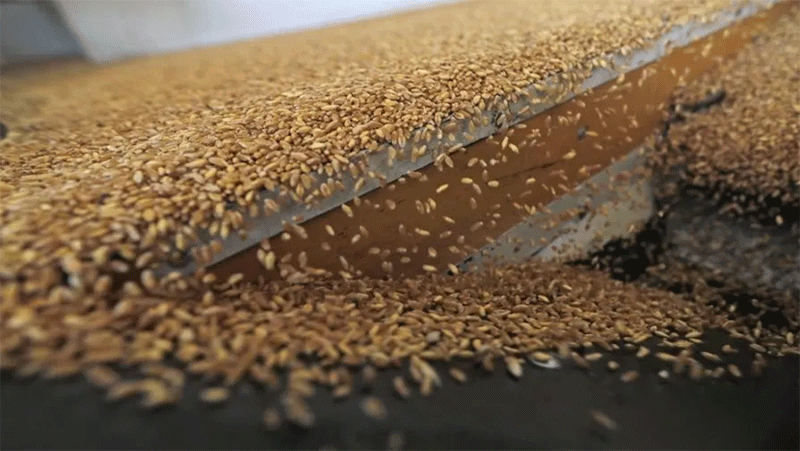
The cornerstone of Jordan’s approach is the direct control of its strategic reserves. Yanal Al-Barmawi, a media spokesperson and advisor at the Ministry of Industry, Trade and Supply, confirmed that the national storage capacity for wheat and barley is set to increase to 2.3 million tons by the end of the year. This expansion is fueled by the completion of new facilities in Al-Qatraneh, adding a substantial 600,000 tons of capacity. This level of storage enables the kingdom to hold a 12-month supply of both commodities, a critical buffer in an unpredictable global market.
This physical infrastructure is supported by a proactive purchasing strategy. The ministry follows a “continuous strategy of purchasing wheat and barley from multiple sources” to maintain and stabilize national reserves, thereby mitigating the risk of reliance on any single supplier. This is a prudent move, given that global wheat prices have experienced significant fluctuations due to geopolitical tensions and climate events in key exporting nations.
The Economics of the Subsidy: A Calculated Intervention
The financial commitment to this policy is staggering. The government has allocated a total of JD 171 million to support wheat and barley, with JD 109 million dedicated specifically to wheat (bread) subsidies in 2026. The mechanism of this subsidy is precise: the actual cost of one ton of wheat is JD 252, but mills purchase it at a subsidized rate of JD 139. This results in a government-borne subsidy of JD 113 per ton.
This direct intervention is designed specifically to “maintain stable bread prices and prevent them from being affected by the rise in global wheat prices and production costs.” Furthermore, the policy includes continued direct support for approximately 1,100 traditional stone bakeries nationwide, ensuring their viability and preserving a key part of the local food production chain.
Enforcement and Compliance
To ensure the benefits of this subsidy reach the public, the government maintains strict oversight. Al-Barmawi emphasized that “all bakeries are obligated to adhere to the government-set prices for bread, with no exceptions permitted.” Ongoing inspection campaigns are conducted to enforce compliance and monitor bread availability, with reported violations remaining minimal due to this continuous monitoring.
Jordan’s comprehensive strategy offers a compelling case study in proactive food security management. By combining a massive investment in physical grain storage with a transparent and substantial subsidy program, the kingdom is creating a formidable shield against global market volatility. This dual approach not only stabilizes a critical commodity price for consumers but also provides a predictable environment for the entire domestic bread supply chain, from importers to bakers. For agricultural professionals worldwide, it underscores the increasing importance of national strategic reserves and targeted financial tools as essential components of modern food policy.
Error