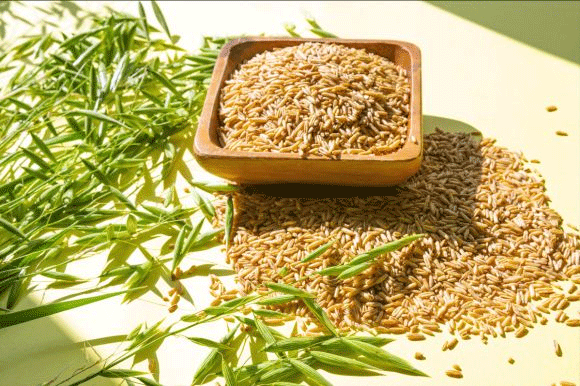
In the competitive world of cereal grains, a standout product often requires a unique combination of agronomic advantage, nutritional science, and market innovation. The “Naked Oats” (Ssalgwiri) from South Korea’s Gangjin County are a prime example. Hailed as the country’s leading production region, Gangjin leverages its clean environment and abundant sunlight to produce a premium oat that requires no dehulling, resulting in a soft texture and a direct path to the consumer’s plate. This isn’t just another commodity crop; it’s a targeted health food success story.
The core of this success lies in the grain’s robust nutritional profile, which aligns perfectly with global wellness trends. As highlighted by the Korean Rural Development Administration (RDA), these naked oats are rich in protein and dietary fiber, supporting weight management and digestive health. Crucially, they are also a potent source of beta-glucan, a soluble fiber with scientifically-backed benefits. According to a comprehensive 2023 meta-analysis in the American Journal of Clinical Nutrition, consistent consumption of oat beta-glucan can significantly reduce LDL (“bad”) cholesterol levels, directly contributing to cardiovascular disease prevention. This powerful health claim moves the product from a simple carbohydrate to a functional food, justifying a premium position in the market.
Recognizing that nutritional value alone isn’t enough, Gangjin County has aggressively pursued a value-added strategy to drive consumption and farmer income. Instead of relying solely on selling the raw grain, they have developed a diverse portfolio of processed goods. This includes convenience products like oat meal replacements and oat rice cakes for busy consumers, as well as an array of innovative snacks such as shiitake mushroom “nurungji” chips, savory rice crackers, chocolate, cookies, and muffins. This strategic diversification does two things: it captures higher margins than selling raw commodities, and it integrates the healthy grain into multiple daily eating occasions, dramatically expanding its market reach.
County Mayor Kang Jin-won has explicitly stated the goal is to transition “from the nation’s top naked oat producer to a hub for naked oat processed products,” actively fostering a vibrant third industry around the local crop. This model of localizing the entire value chain—from field to finished consumer product—enhances regional economic resilience and provides a blueprint for other agricultural communities.
The story of Gangjin’s naked oats provides a powerful lesson for the broader agricultural sector. It demonstrates that success in modern agribusiness is not solely about yield, but about integrating agronomy, nutritional science, and consumer marketing. By cultivating a specialty crop with a clear health narrative and then strategically developing a diverse range of value-added products, producers can capture more value, stabilize farm incomes, and build a durable brand that resonates directly with today’s health-conscious consumers. This approach transforms a local commodity into a premium ingredient, ensuring its place not just in fields, but in the evolving marketplace.
Error