
Unprecedented autumn rainfall has created a race against time across China’s wheat heartland, with provinces like Henan and Anhui reporting planting delays of 7 to 15 days compared to normal years. This narrow window threatens the establishment of the winter wheat crop before freezing temperatures set in. In response, a massive coordinated effort is underway, combining targeted agronomic techniques with rapid mechanization. Provincial agricultural departments have deployed dozens of expert teams to the front lines, guiding farmers through a suite of emergency measures designed to expel excess water from waterlogged fields and accelerate sowing the moment conditions permit.
Technical Interventions and Coordinated Response
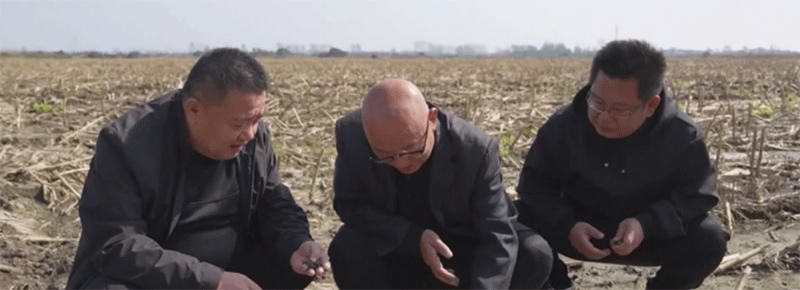
The strategy is two-pronged: first, actively modifying the soil environment, and second, preparing for high-speed, precision planting when the opportunity arises. In Qi County, Henan, farmers are using deep loosening techniques (深松散墒法). This involves using subsoilers to break up compacted wet soil, creating channels that enhance aeration and dramatically accelerate water drainage. This is a critical intervention, as waterlogged soil can delay germination and weaken root systems. Meanwhile, in areas where soil moisture has finally dropped to acceptable levels, such as Laodian Town, operators are working around the clock with precision seeders to plant as many acres as possible in the shortened timeframe.
The scale of the government’s technical response is significant. Henan alone has dispatched 18 provincial-level guidance teams to work alongside local agronomists. Their expertise is vital for making real-time decisions. The national meteorological service is playing a crucial role, providing forecasts that predict a turn to suitable soil conditions around October 25th, which has become the target date for a massive, province-wide planting push. This scenario is a powerful example of “climate-smart agriculture,” where advanced forecasting directly informs on-farm operational planning to mitigate weather-related losses.
Resilience Through Technology and Coordination
The current crisis in China’s wheat belt underscores the growing challenges of climate volatility and the critical importance of adaptive farm management. The situation demonstrates that modern agricultural resilience is built not just on hardy seed varieties, but on a responsive support system that includes:
- Targeted Mechanization: The use of specialized equipment like subsoilers and precision drills is essential for overcoming adverse conditions and ensuring efficient resource use.
- Expert-Led Local Guidance: Deploying scientists and agronomists directly to fields ensures that solutions are tailored to specific local conditions.
- Integrated Data Utilization: Leveraging meteorological data allows for precise planning and resource mobilization, turning a narrow weather window into an actionable planting schedule.
For the global agricultural community, this response offers a valuable case study in managing extreme weather events. The success of the upcoming harvest hinges on this synchronized effort, proving that overcoming climate-driven setbacks requires a deeply integrated approach combining technology, knowledge, and timely execution.
Error