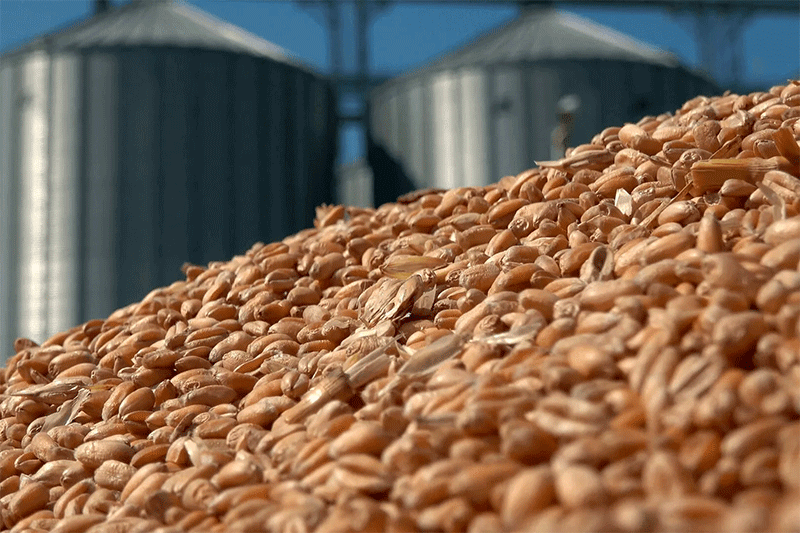
The Oryol region, a key part of Russia’s Central agricultural belt, presents a paradoxical harvest picture for 2024. On the surface, the numbers are robust: 3.9 million tonnes of grain and leguminous crops have been threshed, alongside 779.2 thousand tonnes of oilseeds. However, a deeper look into the quality data reveals a troubling trend for farm profitability. The region’s harvest of the most valuable wheat it can consistently produce—Class 3—has seen a dramatic contraction.
The Premium Grain Deficit: A Blow to Farmer Margins
In Oryol, the climatic conditions are generally unsuitable for producing the elite Class 1 and 2 wheat common in the southern regions like Krasnodar. Therefore, Class 3 wheat is the local gold standard, commanding the highest price as it is used for superior baking flour.
This year, that premium grain is in short supply. According to the Rosselkhoznadzor (Federal Service for Veterinary and Phytosanitary Surveillance) for Oryol and Kursk regions, the share of Class 3 wheat in the total harvest has plummeted to 23%. This is a sharp drop from the 33.4% recorded in the previous year and is notably lower than the 34.1% that had been threshed as recently as August, indicating that later-harvested grain significantly dragged down the average quality.
The current quality breakdown for the region’s food wheat (which makes up 86% of the harvest) is:
- Class 3: 23%
- Class 4: 63%
- Class 5: 14%
This shift towards lower-class grain has direct financial consequences, as Class 4 and 5 wheat fetch substantially lower prices on the market.
The Agronomic Culprits: Unpacking the Quality Decline
The decline in grain quality is rarely random and is typically linked to specific agronomic and environmental stressors. While the provided text does not specify the exact cause, the pattern is consistent with challenges faced by grain producers globally. Potential factors include:
- Weather During Grain Fill: Excessive rainfall, humidity, or drought stress during the critical grain-filling period can directly reduce protein accumulation and gluten strength, leading to downgrading.
- Nitrogen Management: Insufficient or poorly timed nitrogen application is a primary driver of low protein content. High yields can sometimes “dilute” protein levels if nutrient management is not precisely calibrated.
- Disease Pressure: Foliar diseases like rusts or septoria can damage the plant’s photosynthetic capacity, impairing its ability to produce high-quality grain.
This situation in Oryol is a local manifestation of a global issue. A 2023 report from the International Grains Council (IGC) highlighted that climate volatility is increasingly impacting not just yield, but also the quality consistency of major wheat exports, creating market uncertainty. Furthermore, research in the Journal of Agricultural Science consistently shows that achieving both high yield and high protein is a major agronomic challenge, often requiring a delicate balance of genetics, nutrition, and moisture.
The Imperative Shift from Tonnage to Quality
The Oryol harvest data serves as a critical reminder that in modern agriculture, yield volume alone is an incomplete measure of success. Profitability is increasingly tied to the production of consistent, high-quality grain that meets specific market demands.
For farmers, agronomists, and scientists, the focus must now intensify on managing for quality. This involves:
- Precision Nutrition: Refining nitrogen strategies to ensure adequate protein synthesis without sacrificing yield.
- Varietal Selection: Prioritizing wheat varieties with strong genetic potential for high protein and good gluten quality, even under stress.
- Integrated Pest and Disease Management: Protecting the plant’s canopy to ensure uninterrupted grain filling.
The shrinking share of Class 3 wheat in Oryol is not just a statistic; it is a signal to the entire industry to elevate agronomic practices that protect and enhance the value of every tonne produced.
Error