
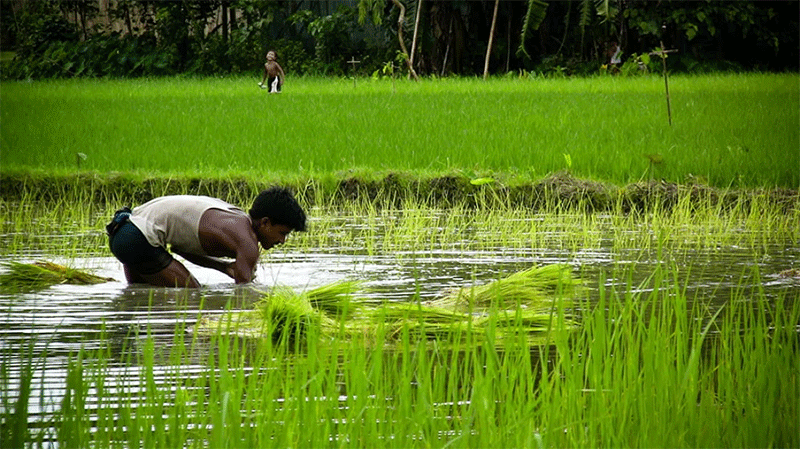
In an unprecedented agricultural experiment, the United Kingdom is harvesting its first-ever rice crop from paddy fields in Cambridgeshire. This development, once considered impossible, has been facilitated by Britain’s hottest summer since records began in 1884. Meanwhile, halfway across the world, Bangladesh—a nation where rice sustains millions and occupies over two-thirds of arable land—faces an existential threat from those very same rising temperatures. This stark contrast illustrates the profoundly uneven geographical impact of climate change on global food production, creating potential new growing zones in temperate regions while pushing traditional agricultural heartlands beyond their thermal limits.
The Bangladeshi Reality: Heat Stress and Yield Loss
For Bangladesh, the climate challenge is not theoretical but immediate. Scientific studies cited in the text reveal a alarming correlation: a 1°C temperature increase can result in up to 7% yield loss in rice. The economic toll is already substantial, with a recent World Bank report quantifying the impact of heat at $1.78 billion, or 0.4% of Bangladesh’s GDP in 2024. Since 1980, the country’s maximum temperature has risen by 1.1°C, but the “feels like” temperature, which accounts for debilitating humidity, has surged by a staggering 4.5°C.
The physiological impact on the rice plant is multifaceted and severe:
- High nighttime temperatures disrupt the critical grain-filling process.
- Extreme heat causes direct physiological damage and reduces photosynthetic efficiency.
- The negative impact is non-linear, meaning yield losses accelerate beyond certain temperature thresholds.
This comes at a time when Bangladesh, a densely populated and land-scarce nation, still struggles to meet domestic demand and must periodically import rice to fill the gap.
The Human and Economic Toll
The consequences extend beyond the crop itself. Farmers working long hours in paddy fields are suffering from increased physical stress and mental health issues, including depression and anxiety, due to increasingly frequent heatwaves. This creates a dual crisis of declining agricultural productivity and a burgeoning public health challenge, threatening both food security and rural livelihoods.
The Scientific Response: Breeding for Resilience
The solution lies in a concerted, science-driven effort to develop climate-resilient agriculture. The International Rice Research Institute (IRRI) and national partners are working to breed heat-tolerant rice varieties. A key strategy, as voiced by Bangladeshi farmers, is the development of early-maturing varieties that allow the crucial winter Boro rice crop to be harvested before the most intense summer heat arrives. This race against the thermometer is critical to sustaining production.
The simultaneous story of experimental rice in the UK and heat-stressed paddies in Bangladesh serves as a powerful warning. Climate change is actively redrawing the map of global agricultural potential, creating winners and losers in a high-stakes game of food security. For countries like Bangladesh, the path forward demands urgent and strategic policy interventions. This includes significantly increased investment in agricultural R&D, a focus on developing and disseminating next-generation, heat-tolerant crop varieties, and building national capacity in frontier sciences. The future of food security for millions depends on our ability to innovate and adapt faster than the temperatures rise. The success of the UK’s rice experiment is a scientific curiosity; the success of Bangladesh’s adaptation efforts is a matter of survival.
Error